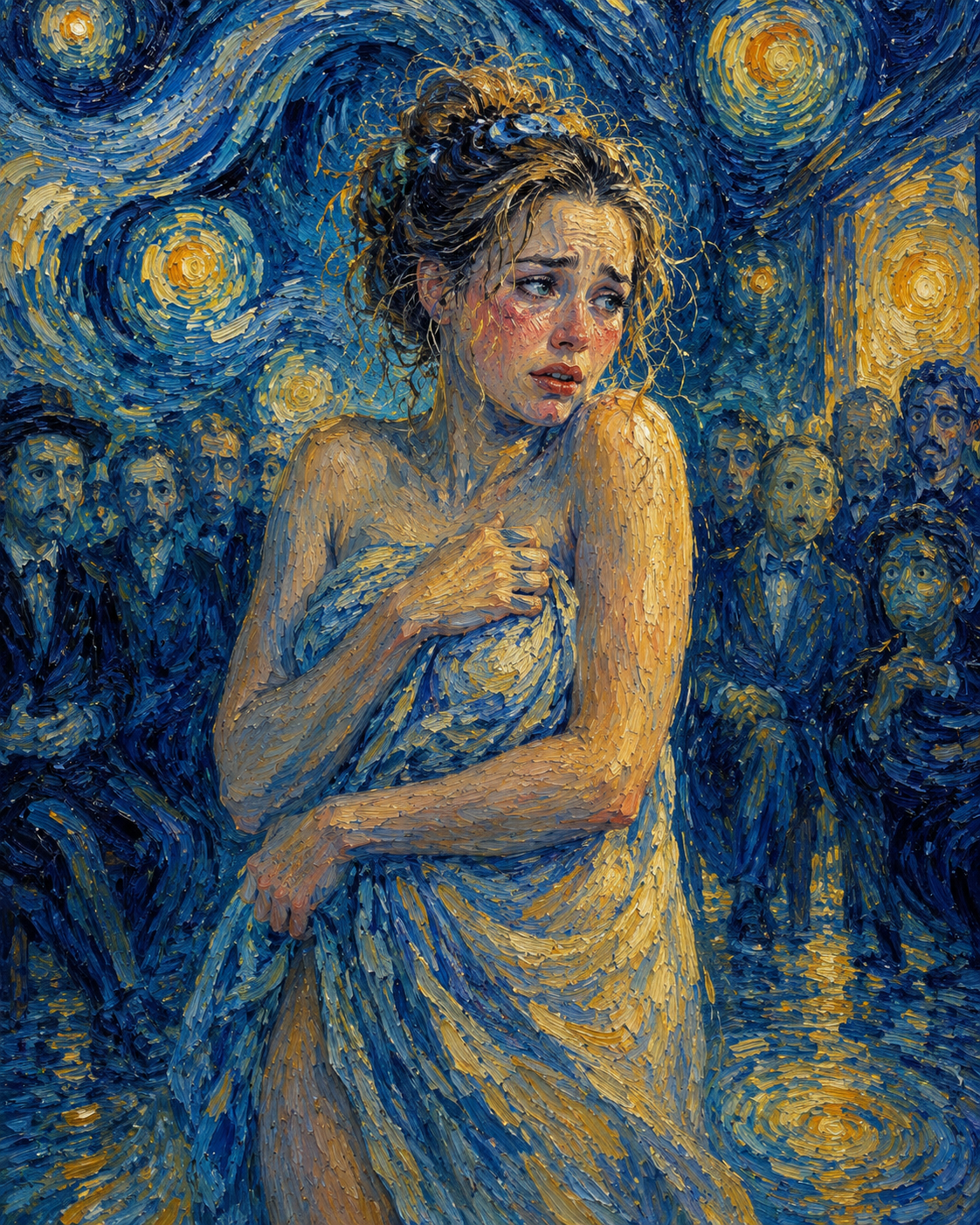
“EVERYTHING IS OUT…
EVERYTHING!”
-J. Dreamzzz
Nudity: Cultural, Historical, and Artistic Summary
Nudity refers to the state of being partially or completely unclothed. Across human history, attitudes toward nudity have varied widely depending on culture, religion, climate, social class, artistic tradition, and historical period. In some societies, the unclothed body has been associated with innocence, beauty, athleticism, spirituality, fertility, or naturalness. In others, nudity has been strongly connected with privacy, sexuality, shame, vulnerability, or social taboo.
Because these meanings differ so greatly, nudity cannot be understood through a single cultural interpretation. The meaning of an unclothed body depends heavily on context—whether it appears in art, religion, daily life, medicine, ritual, protest, or private experience.
Historical Perspectives
Human representations of the nude body date back to prehistoric times.
Some of the earliest surviving human figurines emphasize the body, particularly reproductive features. Famous prehistoric examples include the so-called Venus figurines, created tens of thousands of years ago. Their exact purpose is unknown, but scholars have proposed connections with fertility, identity, ritual, motherhood, or symbolic representations of the human body.
Ancient civilizations developed very different attitudes toward nudity.
In Ancient Greece, male nudity became strongly associated with athleticism, heroism, physical perfection, and citizenship. Male athletes sometimes competed nude, and sculptors created idealized representations of gods, heroes, and athletes.
The Greeks developed artistic principles emphasizing proportion, balance, and harmony. The nude body therefore became a major subject through which artists explored ideals of beauty and human potential.
Ancient Roman artists adopted many Greek artistic traditions. Roman sculptures frequently portrayed gods, mythological figures, emperors, and heroes in partially or completely nude forms, sometimes using nudity symbolically to associate rulers with divine or heroic qualities.
Nudity in the Middle Ages
European attitudes toward the nude body changed considerably during the medieval period.
Christian religious teachings emphasized modesty, and everyday public nudity was generally discouraged. Nevertheless, nude figures continued to appear in religious art.
Biblical subjects such as Adam and Eve, the Last Judgment, martyrdom, and resurrection frequently required artists to portray unclothed or partially clothed bodies.
In these contexts, nudity often symbolized:
- Innocence before sin
- Shame after the Fall
- Vulnerability
- Mortality
- Judgment
- Spiritual exposure
Adam and Eve became particularly influential symbols. Before eating from the Tree of Knowledge, they were portrayed as naked without shame. Afterward, awareness of their nakedness became associated with the loss of innocence.
Renaissance Art
The Renaissance brought a major revival of interest in classical Greek and Roman representations of the human body.
Artists studied anatomy, proportion, movement, and musculature with extraordinary detail.
Some of the most famous examples include:
- Michelangelo’s David
- Michelangelo’s figures in the Sistine Chapel
- Botticelli’s The Birth of Venus
- Titian’s reclining Venus paintings
Renaissance artists frequently treated the human body as evidence of beauty, artistic skill, and the complexity of creation.
Nudity could symbolize heroism, divine beauty, innocence, mythology, or idealized humanity rather than sexuality alone.
Nudity in Western Art
During later artistic periods, the nude remained an important subject.
Baroque, Neoclassical, Romantic, Realist, Impressionist, and Modern artists each approached the body differently.
Artists including Peter Paul Rubens, Francisco Goya, Édouard Manet, Edgar Degas, Auguste Rodin, Pablo Picasso, and Amedeo Modigliani used the human form to examine beauty, emotion, sexuality, identity, aging, vulnerability, and social expectations.
Manet’s Olympia, exhibited in 1865, became especially controversial because its subject directly confronted the viewer rather than appearing as a distant mythological ideal. The painting challenged traditional expectations concerning female nudity and respectability in art.
Cultural Differences
Standards concerning nudity vary considerably between societies.
In some cultures, exposure of certain parts of the body historically carried little sexual meaning. Clothing customs were often influenced by climate, available materials, occupation, and local tradition.
European colonialism sometimes imposed foreign standards of dress and modesty upon Indigenous populations whose traditional clothing practices differed greatly.
As a result, modern attitudes toward nudity in many regions reflect mixtures of Indigenous customs, religious teachings, colonial history, and contemporary social values.
Even today, what is considered inappropriate exposure in one society may be completely ordinary in another.
Religious Perspectives
Religious traditions have played major roles in shaping attitudes toward nudity.
Christianity, Judaism, and Islam generally emphasize modesty, although interpretations and clothing standards differ significantly among communities.
Hindu artistic traditions include numerous representations of partially nude gods, celestial beings, and human figures. Temple sculpture sometimes celebrates fertility, beauty, divine energy, and the unity of physical and spiritual existence.
Jain traditions include the Digambara monastic tradition, in which certain male monks traditionally renounce clothing as a symbol of complete detachment from material possessions.
Different religious traditions therefore associate the unclothed body with ideas ranging from modesty and temptation to innocence, renunciation, purity, or spiritual freedom.
Nudity and Shame
The connection between nudity and embarrassment is largely shaped by social learning.
Children gradually learn cultural expectations concerning:
- Privacy
- Clothing
- Gender
- Public behavior
- Personal boundaries
In cultures where public nudity is strongly restricted, unexpected exposure may produce intense embarrassment or vulnerability.
Psychologically, clothing serves not only as physical protection but also as part of personal identity and social presentation. Losing clothing unexpectedly can therefore produce feelings of being exposed, judged, or unable to control how others perceive oneself.
This relationship between nudity and vulnerability has made the unclothed body a powerful symbol in art, literature, and dreams.
Nudity and Social Status
Historically, clothing has often communicated wealth and social position.
Elaborate fabrics, jewelry, uniforms, ceremonial clothing, and distinctive colors could indicate occupation, rank, political authority, or wealth.
Removing those markers leaves the human body without obvious indications of social status.
For this reason, nudity has sometimes symbolized equality or the idea that wealth and rank disappear when external possessions are removed.
It can also symbolize humiliation when clothing is forcibly taken away as punishment or degradation.
Nudity as Protest
In modern society, nudity has occasionally been used as a form of political or social protest.
Activists have used the unclothed body to attract attention to causes involving war, environmental protection, gender equality, censorship, animal rights, and bodily autonomy.
In these circumstances, nudity becomes a communication strategy rather than primarily a sexual act.
Its ability to challenge social conventions makes it particularly attention-grabbing.
Artistic Importance of the Nude
Artists have studied the nude body for centuries because it reveals complex relationships between bones, muscles, posture, movement, balance, and proportion.
Traditional art education often includes figure drawing, in which artists study live models to understand human anatomy.
The artistic nude can communicate many emotions and ideas, including:
- Strength
- Vulnerability
- Beauty
- Mortality
- Innocence
- Desire
- Aging
- Suffering
- Freedom
- Identity
This explains why nude figures appear across painting, sculpture, photography, and contemporary art.
Idealization Versus Realism
Artistic representations of nudity have not always reflected ordinary human bodies.
Classical and Renaissance artists frequently idealized proportions and physical features.
Other artists deliberately rejected these ideals.
Modern and contemporary artists have increasingly portrayed a greater range of:
- Ages
- Body types
- Skin tones
- Physical conditions
- Gender expressions
These works often challenge narrow definitions of beauty and encourage viewers to consider how society evaluates the human body.
Nudity in Photography and Film
Photography introduced new debates about the distinction between artistic nudity and pornography.
Museums, courts, publishers, and cultural institutions have repeatedly debated whether a nude image should be interpreted according to:
- Artistic intent
- Sexual content
- Context
- Pose
- Audience
- Cultural standards
Film created similar debates, particularly as censorship systems developed during the twentieth century.
Standards have changed considerably over time, demonstrating that social responses to nudity are historically flexible rather than fixed.
Symbolic Meaning
In art, literature, mythology, and psychology, nudity often symbolizes exposure.
Someone without clothing may appear stripped of social protections, secrets, wealth, authority, or identity.
Nudity may therefore represent:
- Vulnerability
- Embarrassment
- Honesty
- Innocence
- Freedom
- Shame
- Exposure
- Authenticity
- Powerlessness
- Naturalness
The meaning changes according to the person’s emotional state and surrounding circumstances.
A confident nude figure may symbolize liberation or self-acceptance, while a frightened person attempting to cover themselves may represent humiliation, insecurity, vulnerability, or fear of judgment.
Conclusion
Nudity has carried dramatically different meanings throughout human history. Ancient Greeks celebrated the idealized body as a symbol of heroism and beauty, medieval religious art connected nakedness with innocence and vulnerability, Renaissance artists revived classical studies of anatomy, and modern artists used the nude to challenge social expectations surrounding identity, sexuality, beauty, and power.
Culturally, attitudes toward nudity continue to differ widely. What one society considers ordinary another may regard as intensely private. Artistically, however, the human body remains one of the oldest and most important subjects in visual culture.
Its enduring significance comes partly from its symbolic power: without clothing, a person may appear both completely natural and completely exposed, making nudity a particularly powerful representation of vulnerability, identity, freedom, shame, and the fundamental human condition.

Sigmund Freud on Being Nude Within Dreams

Sigmund Freud gave dreams of being naked or insufficiently clothed in public unusually detailed attention in The Interpretation of Dreams. He regarded them as one of the relatively small group of “typical dreams”—dream forms that occur so frequently that broad similarities can sometimes be identified across different dreamers.
Freud’s interpretation, however, was more complicated than the common statement that “nudity means sexual desire.” For him, the most important version of the nude dream combines exposure, embarrassment, a desire to hide or escape, and a strange inability to correct the situation. He connected this dream structure with childhood experiences of being unclothed without shame, later adult prohibitions surrounding exposure, and the conflict between an underlying exhibitionistic wish and the embarrassment produced by adult restraint.
Within Freud’s framework, dreaming of nudity can potentially involve:
- Exposure and embarrassment.
- Fear of being seen.
- Exhibitionistic wishes.
- Childhood memories of being unclothed.
- The wish to return to a condition without shame.
- Conflict between desire and social prohibition.
- Anxiety about being judged.
- A wish to hide something about oneself.
- The tension between adult modesty and earlier childhood freedom.
- Dream censorship altering or disguising an underlying wish.
The exact circumstances of the dream remain important.
Freud’s “Embarrassment Dream of Nakedness”
Freud specifically described what he called the embarrassment dream of nakedness.
The typical pattern is familiar:
The dreamer discovers that they are completely naked or insufficiently dressed in a public place. Other people are present. The dreamer becomes deeply embarrassed and desperately wants to hide, cover themselves, or leave.
Yet something prevents escape.
The dreamer may be unable to move, unable to find clothing, unable to reach a private place, or otherwise incapable of correcting the embarrassing situation.
Freud considered this particular combination especially significant:
nudity + strangers + shame + attempted escape + inhibition
For Freud, merely dreaming of being naked was not enough to constitute the typical embarrassment dream. The accompanying emotional response was essential.
Being Partly Dressed Can Be Enough
Freud observed that the dreamer does not always appear completely naked.
Sometimes the person may be:
- Wearing only underwear.
- Missing trousers.
- Wearing a nightshirt.
- Wearing inappropriate clothing.
- Missing an important part of a uniform.
- Dressed in a way that violates expected social rules.
The degree of undress can actually seem too minor to justify the tremendous embarrassment experienced in the dream.
This discrepancy interested Freud.
A person might dream of simply lacking a necktie or wearing the wrong trousers yet experience the same overwhelming humiliation that would accompany complete nakedness.
The important feature is therefore not necessarily how much skin is exposed.
It is the dreamer’s feeling:
“I am not properly covered, and everyone could see something that should not be visible.”
The Strangers Usually Do Not Care
One of Freud’s most fascinating observations concerns the people who witness the dreamer’s nudity.
The dreamer expects humiliation.
They may expect others to:
- Stare.
- Laugh.
- Criticize.
- Become shocked.
- Point at them.
Yet Freud observed that the spectators in the typical nude dream are often strangely indifferent.
They barely react.
Sometimes they appear solemn or uninterested.
This creates an odd contradiction.
The dreamer thinks:
“This is horrifying. Everyone can see me.”
Yet everyone else behaves as though nothing unusual has happened.
Freud regarded this mismatch as significant.
The embarrassment remains, but the expected humiliation from other people is reduced.
From his perspective, this reflects the complicated nature of wish fulfillment in dreams. Part of the dream preserves embarrassment, while another tendency removes the spectators’ hostile reaction.
Childhood Nakedness
Freud traced the deeper background of these dreams to early childhood.
Young children commonly experience a period in which being naked does not automatically produce adult feelings of embarrassment.
A young child may:
- Run around unclothed.
- Undress without concern.
- Enjoy being seen.
- Display the body without understanding adult standards of modesty.
Freud regarded this early period as especially important.
Later, social expectations introduce:
- Modesty.
- Shame.
- Privacy.
- Rules about clothing.
- Restrictions surrounding bodily exposure.
What once occurred freely becomes prohibited.
For Freud, dreams of public nakedness can revive something from that earlier psychological condition.
The Exhibition Dream
Freud therefore called nude dreams exhibition dreams.
The term does not simply mean that the adult dreamer consciously wants to expose themselves publicly.
Rather, Freud believed that underneath the adult embarrassment lies a much earlier wish connected with childhood exhibitionism.
The adult says:
“I must not be seen naked.”
But the earlier child once existed in a psychological world where nakedness did not carry the same prohibition.
The dream allows both conditions to exist simultaneously.
The dreamer is exposed.
The childhood wish has therefore been fulfilled.
But adult modesty remains.
The dreamer consequently experiences intense embarrassment.
This creates the strange combination:
being exposed + wanting exposure at an unconscious level + desperately wanting to hide at the conscious emotional level.
Paradise and the Absence of Shame
Freud made an especially striking comparison between childhood nakedness and the biblical image of Paradise.
He noted that in the Paradise story, human beings initially exist naked without shame. Shame appears only later.
Freud used this image as an analogy for early childhood.
Childhood, in memory, can appear like a lost state in which:
- The body is natural.
- Exposure is not embarrassing.
- Adult prohibitions have not yet developed.
The nude dream therefore represents, in Freud’s interpretation, something like a return to this lost condition.
The adult body appears in the dream, but the deeper wish belongs to an earlier stage of life.
Why Does the Dreamer Feel Shame?
If Freud considered nakedness a form of wish fulfillment, an obvious question appears:
Why does the dream feel so unpleasant?
The answer lies partly in Freud’s theory of dream censorship.
Freud distinguished between the underlying thoughts and wishes producing the dream and the dream as it is actually remembered.
Unacceptable wishes can become:
- Altered.
- Disguised.
- Distorted.
- Combined with opposing feelings.
The underlying exhibitionistic wish does not necessarily appear openly as:
“I want everyone to see me naked.”
Instead, the adult dream may become:
“Everyone can see me naked and I am horrified.”
The wish appears, but in a form that conscious personality finds disturbing.
Nudity and the Desire to Escape
Freud placed special emphasis upon the dreamer’s inability to escape.
The person may attempt to:
- Run away.
- Hide.
- Reach another room.
- Find clothing.
- Cover themselves.
Yet nothing works.
Freud discussed inhibited movement elsewhere in The Interpretation of Dreams as a way dreams can represent conflicting intentions.
In the nude dream this produces a particularly revealing structure.
One tendency says:
“Hide yourself.”
Another effectively prevents successful concealment.
The dreamer remains exposed.
Thus the dream preserves the nakedness despite the conscious wish to end it.
Being Unable to Find Clothes
Example
A dreamer suddenly realizes they are naked at work.
They open a closet looking for clothes.
The closet contains nothing.
They run toward another room, but the door will not open.
Within Freud’s framework, the repeated inability to cover the body helps preserve the exhibition situation.
The adult dreamer desperately attempts to restore modesty.
The dream repeatedly prevents success.
The underlying exposure therefore continues.
Being Naked at Work
Freud did not establish a specific formula stating:
naked at work = fear of professional failure.
His method would require the dreamer’s associations.
However, the location could significantly modify the embarrassment dream.
Example
A person dreams of arriving at an important meeting completely naked.
Possible associations might involve:
- Authority.
- Reputation.
- Professional judgment.
- Fear of being exposed before colleagues.
- A memory involving humiliation.
The interpreter would ask what the workplace and the people present mean to the dreamer personally.
The general nude-dream framework provides a starting point, not the entire interpretation.
Being Naked at School
Schools can connect readily with childhood material.
Example
An adult dreams of returning to school and suddenly discovering they are naked in the classroom.
A Freudian investigation might explore:
- Childhood embarrassment.
- Early experiences of bodily exposure.
- Teachers.
- Punishment.
- Classmates.
- Puberty.
- Memories of changing clothes.
- Fear of ridicule.
Because Freud regarded childhood experiences as important sources of dreams, the school setting would deserve careful free association.
Being Naked Before Family
The typical embarrassment dream often involves strangers, but specific relatives can appear.
When they do, Freud’s method requires exploring the actual relationship.
Example
A dreamer discovers that they are naked in front of their parents.
Possible associations could lead toward:
- Childhood memories.
- Parental rules about modesty.
- Fear of judgment.
- Early experiences of bathing or dressing.
- Family attitudes toward sexuality and the body.
The identity of the observer now becomes crucial.
Being Naked Before a Romantic Partner
A dream of nudity before a romantic partner is not automatically equivalent to Freud’s typical embarrassment dream.
The dreamer may feel:
- Comfortable.
- Excited.
- Embarrassed.
- Afraid.
- Ashamed.
- Completely indifferent.
Each emotional response changes the dream.
Example
A dreamer is naked before a partner and desperately hides.
The associations may involve vulnerability, sexual anxiety, or fear of judgment.
Another example
The dreamer is naked and completely comfortable.
The absence of embarrassment means the dream differs substantially from the classic embarrassment dream described by Freud.
Comfortable Nudity
This distinction is extremely important.
Freud’s detailed discussion specifically concerns embarrassing nudity.
If someone dreams of walking naked through a beautiful landscape and experiences no shame whatsoever, it would be inaccurate to mechanically impose the embarrassment-dream interpretation.
The dreamer’s associations become especially important.
Comfortable nakedness might remind the dreamer of:
- Childhood.
- Freedom.
- Vacation.
- Bathing.
- Sexual intimacy.
- Naturism.
- A specific memory.
Freud’s method of free association would determine which path matters.
Enjoying Being Seen Naked
A dream in which the dreamer actively enjoys displaying the body may bring Freud’s idea of exhibitionism much closer to the manifest surface of the dream.
Example
The dreamer intentionally removes all clothing before a crowd and enjoys everyone’s attention.
The exhibitionistic wish is less disguised.
The dream might involve wishes concerning:
- Attention.
- Admiration.
- Sexual display.
- Recognition.
- Freedom from social restraint.
But even here, Freud would require personal associations before final interpretation.
Nobody Notices the Dreamer
The spectators’ indifference is one of the most distinctive parts of Freud’s typical nude dream.
Example
The dreamer walks naked through a crowded street.
They are horrified.
Nobody even looks.
This contradiction fits Freud’s description remarkably well.
The dream contains the exposure, but the audience fails to deliver the expected humiliation.
One could summarize the structure as:
“I am exposed, but nobody punishes me for being exposed.”
That combination allows both anxiety and wish fulfillment to coexist.
Everyone Laughs
If the entire crowd openly mocks the dreamer, the dream differs somewhat from Freud’s most typical pattern.
The ridicule may bring in more personal material involving:
- Actual humiliation.
- Childhood teasing.
- Fear of criticism.
- Social anxiety.
- A recent embarrassing experience.
Free association would be particularly important.
Being Nude but Unable to Cover Yourself
Example
The dreamer repeatedly tries to cover the body with their hands, but the hands become transparent.
The dream preserves the fundamental situation:
exposure cannot be corrected.
Within Freud’s approach, the failure of concealment may reveal the same conflict found in the classic embarrassment dream.
Clothing That Disappears
Example
Every time the dreamer puts clothes on, they immediately disappear.
The dreamer becomes increasingly embarrassed.
Again, the dream-work keeps restoring the state of exposure despite conscious attempts to eliminate it.
This makes the underlying exhibition theme especially strong.
Being Nude on Stage
A stage naturally intensifies the idea of being seen.
Example
The dreamer walks onto a stage expecting to give a speech and suddenly discovers they are naked.
A Freudian examination would investigate associations involving:
- Performance.
- Attention.
- Exhibition.
- Judgment.
- Desire to be noticed.
- Fear of being judged while being noticed.
The dream might contain both a wish for attention and anxiety about receiving it.
Nudity and Vulnerability
Modern popular interpretation frequently says that nudity automatically represents vulnerability.
That statement should not simply be attributed to Freud.
Freud’s documented interpretation emphasizes exhibitionism, childhood nakedness, wish fulfillment, embarrassment, and inhibition.
However, if a particular dreamer freely associates nakedness with vulnerability, then vulnerability becomes relevant within Freud’s own method.
The meaning comes from the dreamer’s association, not from a universal formula.
Nudity and Secrets
Likewise, Freud did not establish:
nakedness = secrets being exposed
as a universal rule.
But a dreamer may personally connect being naked with having something private revealed.
Example
A person hiding an embarrassing fact dreams of suddenly losing all clothing before people who know them.
Their spontaneous association may be:
“They can see everything.”
That association would become legitimate Freudian material.
The Dreamer’s Age Matters
Because Freud linked exhibition dreams with childhood, memories from early life can be especially important.
Questions might include:
- Did family members tell stories about the dreamer running around naked as a child?
- Was nudity treated casually or severely?
- Were there embarrassing incidents involving clothing?
- Did the dreamer experience teasing?
- Was bodily modesty strongly enforced?
The dream may combine current embarrassment with much older material.
Repeated Nude Dreams
Recurring nakedness dreams deserve attention to their changing structure.
For example:
Dream 1: The dreamer is naked and terrified.
Dream 2: The dreamer tries to hide but nobody notices.
Dream 3: The dreamer remains naked but becomes less embarrassed.
Dream 4: The dreamer deliberately walks outside unclothed.
From a Freudian perspective, the sequence could indicate a changing relationship to the underlying wish or prohibition.
However, the dreamer’s waking circumstances would still need examination.
Nudity With Missing Clothing Rather Than Total Nakedness
Freud specifically emphasized that the clothing deficiency in embarrassment dreams may be surprisingly minor.
A soldier might dream of lacking an expected piece of military equipment or uniform.
Another person might dream of:
- Missing shoes.
- Wearing pajamas outdoors.
- Wearing underwear at work.
- Forgetting trousers.
- Wearing clothes inappropriate to the occasion.
The psychological structure remains:
“I am improperly presented before others.”
This broadens Freud’s nude-dream category considerably.
Clothing as Social Regulation
Although Freud’s specific discussion centers on childhood exhibitionism, clothing also marks the transition between private bodily life and socially regulated adulthood.
The embarrassment dream can therefore be understood as a collision between two conditions:
the unclothed child
and
the socially regulated adult.
The child once possessed relative freedom from shame.
The adult has learned the rules.
The dream brings both together.
The Emperor’s New Clothes
Freud noticed that the structure of the typical nude dream resembles the situation depicted in “The Emperor’s New Clothes.”
The central paradox is similar:
A person is exposed publicly, yet the surrounding crowd behaves in an oddly restrained or indifferent way.
Freud regarded the resemblance as evidence of how deeply this situation resonates psychologically.
The naked person experiences exposure.
The spectators refuse to respond in the expected manner.
The result is a peculiar mixture of humiliation and wish fulfillment. Project Gutenberg
Questions for a Freudian Interpretation of Nude Dreams
A careful Freudian examination would ask:
- Was I completely naked or only partly undressed?
- Where was I?
- Who was present?
- Were the observers strangers or people I knew?
- Did they notice me?
- Did they laugh?
- Were they strangely indifferent?
- Was I embarrassed?
- Did I enjoy being naked?
- Did I try to hide?
- Could I escape?
- Could I find clothing?
- Did something prevent me from covering myself?
- What childhood memories do I associate with nakedness?
- What did my family teach me about modesty?
- Have I recently experienced embarrassment or exposure?
- Does the dream remind me of wanting attention?
- Does it remind me of fearing attention?
- What would have happened if everyone noticed?
- What would have happened if nobody cared?
- What associations do I have with the particular clothing that was missing?
Perhaps the most revealing question is:
“Was the dream really about nakedness—or about being seen?”
Conclusion
Sigmund Freud’s interpretation of nude dreams is one of his clearest discussions of a typical dream.
He was especially interested in dreams where the person is naked or inadequately clothed before other people and experiences intense shame and embarrassment, desperately wants to hide, yet discovers that escape or concealment is impossible.
Freud connected this recurring dream structure with early childhood exhibitionism.
Children pass through a period in which nakedness does not carry the same shame that adulthood later imposes. The child may freely expose the body without understanding adult rules of modesty.
The adult embarrassment dream revives something from this earlier condition.
The underlying wish allows the dreamer to become exposed again.
But adult prohibitions remain active.
Consequently, the dreamer feels ashamed.
This produces the peculiar contradiction at the center of Freud’s nude dream:
The dreamer is exposed but desperately wants to hide.
Another contradiction appears in the spectators.
The dreamer expects them to stare, laugh, condemn, or humiliate.
Yet Freud observed that they are frequently indifferent.
Thus the dream preserves the exhibition while reducing the punishment for it.
For Freud, this combination reflects the compromises created by dream-work and wish fulfillment.
Nudity therefore does not simply mean sex.
Nor does Freud’s interpretation reduce every naked dream to vulnerability, humiliation, or fear of secrets being exposed.
The most specifically Freudian interpretation concerns the return of an earlier condition of uninhibited exhibition, altered by adult shame and censorship.
The central Freudian question is therefore:
“Why has the dream placed me in a situation where I am exposed, why am I ashamed of being seen, why can I not successfully cover or escape, and what earlier wish or childhood experience may be returning beneath that embarrassment?”
Bibliography
Freud, Sigmund. The Interpretation of Dreams (Die Traumdeutung). First published 1899/1900. See especially the section on “Typical Dreams” and Freud’s treatment of the embarrassment dream of nakedness.
Freud, Sigmund. Introductory Lectures on Psycho-Analysis. 1916–1917. Relevant to Freud’s broader theories of dream formation, wish fulfillment, censorship, repression, and symbolic representation.
Freud, Sigmund. New Introductory Lectures on Psycho-Analysis. 1933. Relevant to Freud’s later presentation of unconscious processes and the psychoanalytic interpretation of dreams.
Carl Jung on Being Nude Within Dreams

Carl Jung did not establish a single universal rule stating that nudity in dreams always means vulnerability, sexuality, embarrassment, honesty, or freedom. His approach required the interpreter to consider the dreamer’s personal associations, emotional reaction, current circumstances, the setting of the dream, the people who witness the nudity, and the relationship between the dream image and the dreamer’s conscious attitude.
Within Jung’s analytical psychology, however, dreams of being naked can become especially meaningful because clothing is closely connected with social identity, adaptation, appearance, status, and the persona. When clothing disappears, the dreamer may symbolically lose the layer through which they ordinarily present themselves to the world.
For this reason, nudity may sometimes relate to:
- The removal of a social mask.
- Exposure of qualities usually hidden from others.
- Conflict between the persona and the deeper personality.
- Fear of judgment.
- Psychological vulnerability.
- Loss of social status or protection.
- Increased authenticity.
- A return to a more instinctive or natural condition.
- Shame concerning an unrecognized part of the personality.
- Compensation for excessive concern with appearance or reputation.
- A stage of individuation in which an old identity is being stripped away.
These possibilities are applications of Jung’s broader psychology, not a fixed dream dictionary attributed to him.
The Persona and Clothing
One of the most useful Jungian ideas for understanding nude dreams is the persona.
Jung used the term persona for the socially adapted identity that a person develops in order to function within society. It includes the roles, behaviors, attitudes, and appearances through which others know us.
A person may identify themselves as:
- A professional.
- Parent.
- Leader.
- Teacher.
- Provider.
- Successful person.
- Respectable member of a community.
These identities are real and necessary, but Jung warned against confusing the persona with the whole personality.
Clothing can easily become a dream image associated with this social presentation.
A uniform identifies an occupation.
A suit may indicate professionalism.
Formal clothing communicates status.
A costume creates a role.
If all clothing suddenly disappears, the dream can represent the removal of that socially adapted exterior.
The Jungian question then becomes:
“Who am I when the role, title, reputation, and social appearance are removed?”
Being Naked in Public
One of the most common nude dreams involves suddenly discovering that one is naked in a public place.
The dreamer might be:
- At work.
- In school.
- Walking through a city.
- Standing before an audience.
- Attending a formal event.
- Surrounded by strangers.
The emotional reaction becomes extremely important.
If the dreamer experiences intense shame, the dream may suggest anxiety about being seen without the protection of the usual social identity.
Example
A highly respected executive dreams of giving an important presentation and suddenly realizes that all clothing has disappeared.
A Jungian interpretation might examine how strongly that person has identified with the professional persona.
The dream could ask:
“What remains when the successful executive identity is removed?”
The fear may not literally concern the body.
It may concern exposure of:
- Insecurity.
- Weakness.
- Uncertainty.
- Emotional need.
- Parts of the personality inconsistent with the public role.
The dream creates literal nakedness to represent psychological exposure.
Nudity and the Loss of the Persona
The disappearance of clothing can sometimes symbolize a temporary collapse of the persona.
Example
A person spends waking life carefully maintaining an image of complete confidence.
In the dream, they enter a crowded room wearing an expensive suit.
One piece of clothing after another disappears until the dreamer stands completely naked.
The dream may progressively remove the constructed public identity.
What initially appeared to be:
successful, controlled, polished
becomes:
unprotected, ordinary, human.
A Jungian interpretation would ask whether the waking personality has become excessively dependent upon outward appearance.
Identification With the Persona
Jung considered excessive identification with the persona psychologically limiting.
A person may gradually believe:
“I am nothing more than my job.”
or:
“I must always appear strong.”
or:
“I must never let anyone see uncertainty.”
A nude dream can compensate for this one-sided attitude by removing everything associated with the social role.
Example
A person obsessed with social status dreams of standing naked among people who normally admire their expensive clothing.
The dream may challenge the question:
“Would I still possess value without the external symbols of importance?”
The nakedness removes the social decoration.
Nudity as Compensation
Jung believed that dreams often compensate for attitudes that have become too one-sided in waking life.
This principle is extremely important when interpreting nakedness.
A person who is overly concerned with:
- Reputation.
- Clothing.
- Appearance.
- Status.
- Social approval.
- Professional identity.
may dream of complete nudity.
Consciousness spends enormous energy constructing appearance.
The dream responds by removing appearance altogether.
Example
A person spends hours worrying about how others perceive them.
They dream of walking naked through a city while nobody reacts.
The dream may compensate for excessive self-consciousness.
The waking personality assumes:
“Everyone is watching me.”
The dream answers:
“Perhaps they are not as concerned with you as you imagine.”
The emotional effect of such a dream might ultimately be liberating.
When Nobody Notices the Nudity
A particularly interesting nude dream occurs when the dreamer is horrified but everyone else behaves normally.
Example
The dreamer enters work completely naked.
They expect laughter and judgment.
Nobody notices.
A Jungian interpretation could examine the difference between the dreamer’s self-evaluation and the actual reaction of the surrounding figures.
The dream may reveal that the greatest judgment comes from within the dreamer, not from the external world.
The unconscious may be compensating for an exaggerated fear of social exposure.
When Everyone Laughs
The opposite dream produces a different situation.
Example
The dreamer becomes naked before a crowd and everyone laughs.
This may concern actual fear of:
- Rejection.
- Humiliation.
- Social judgment.
- Losing status.
- Being discovered as inadequate.
A Jungian analysis would examine whether the crowd resembles actual people or functions more like a collective audience representing the dreamer’s fear of society.
The Shadow and Nudity
Nudity can also become relevant to Jung’s concept of the shadow.
The shadow contains qualities that the conscious personality does not readily identify with.
These may include:
- Anger.
- Fear.
- Jealousy.
- Vulnerability.
- Dependency.
- Ambition.
- Sexual desire.
- Selfishness.
- Creativity.
- Assertiveness.
The persona often helps conceal shadow qualities from social view.
Therefore, becoming naked may symbolically remove the barrier that normally keeps these parts hidden.
Example
A person who prides themselves on emotional toughness dreams of becoming naked while crying uncontrollably before others.
The dream may expose a vulnerability that the conscious personality refuses to acknowledge.
The nakedness reinforces the absence of protection.
The dreamer can no longer maintain the usual role.
Nudity Before a Shadow Figure
Example
The dreamer becomes naked while standing before a frightening stranger.
Instead of attacking, the stranger simply looks at them.
A Jungian approach might ask whether the figure represents an unrecognized aspect of the dreamer.
The nakedness could suggest that the meeting occurs without the protection of the persona.
The ego stands exposed before something it has previously rejected.
Being Naked Before an Authority Figure
A dream involving nudity before a boss, judge, teacher, or other authority may concern psychological exposure before judgment.
Example
The dreamer is called into an employer’s office and suddenly realizes they are naked.
The dream might involve:
- Fear of inadequacy.
- Fear of evaluation.
- Anxiety that weakness will be discovered.
- Excessive dependence on the authority figure’s approval.
The authority figure may also carry a projection.
The dreamer may experience that person as possessing more psychological power than they actually do.
Nudity Before Parents
If the dreamer appears naked before a parent, childhood relationships may become especially relevant.
Example
An adult dreams of standing naked before the father and feeling like a small child.
The dream could activate a complex involving:
- Approval.
- Shame.
- Authority.
- Dependence.
- Criticism.
- Childhood vulnerability.
The adult persona disappears.
A much earlier emotional condition becomes visible.
Nudity Before a Romantic Partner
The emotional tone becomes decisive.
Comfortable nudity
If the dreamer feels peaceful, the image may involve:
- Trust.
- Openness.
- Acceptance.
- Lack of concealment.
Shameful nudity
If the dreamer feels embarrassed, it may involve fear of emotional exposure.
Example
A person dreams of becoming naked before a romantic partner and desperately searching for something to cover themselves.
The dream may ask:
“What am I afraid this person will discover about me?”
The concern may have little to do with the physical body.
It may involve:
- Emotional need.
- Insecurity.
- Past experiences.
- Fear of rejection.
Comfortable Public Nudity
Not every nude dream is embarrassing.
This distinction is crucial.
Example
The dreamer walks naked through a forest and feels completely peaceful.
A Jungian interpretation could consider whether the dream represents a condition closer to natural or instinctive existence, away from the demands of social identity.
The absence of clothing may indicate freedom from social roles rather than humiliation.
The forest could further reinforce movement away from collective society and toward a more instinctive inner world.
Nudity in Nature
Nature changes the symbolism considerably.
Example
The dreamer removes all clothing beside a river and enters the water.
If the experience feels peaceful and intentional, the dream could portray:
- Renewal.
- Return to natural life.
- Leaving an old identity behind.
- Psychological cleansing.
- Greater acceptance of instinct.
The river and the act of removing clothing must be interpreted together.
Voluntarily Removing Clothes
Choosing to undress differs from discovering oneself unexpectedly naked.
Example
The dreamer enters a room filled with people wearing elaborate costumes.
The dreamer deliberately removes their own costume and stands naked.
A Jungian interpretation might see a rejection of false social adaptation.
The dreamer is effectively saying:
“I no longer want to play this role.”
The act may signify increasing authenticity.
Having Clothes Torn Away
If another person removes the dreamer’s clothes by force, the meaning changes.
Example
A crowd tears away the dreamer’s clothing.
This may represent:
- Loss of privacy.
- Forced exposure.
- Fear that personal information will become public.
- Loss of social protection.
- Humiliation.
The dreamer did not choose authenticity.
Exposure was imposed.
The distinction between voluntary and involuntary nakedness is essential.
Clothes Falling Apart
Example
The dreamer’s expensive clothing gradually tears apart during an important ceremony.
The dream may portray a persona that can no longer be maintained.
A role, reputation, or social identity may be deteriorating.
The dreamer may consciously be attempting to preserve an image that deeper psychological reality no longer supports.
Being Unable to Find Clothes
Example
The dreamer knows an important event is about to begin but cannot find anything to wear.
A Jungian interpretation might ask:
“What social role am I not prepared to assume?”
Possible contexts include:
- Promotion.
- Marriage.
- Parenthood.
- Leadership.
- Public responsibility.
Clothing can represent the appropriate persona for the occasion.
The inability to find it may indicate that the dreamer does not yet feel psychologically equipped for the role.
Wearing the Wrong Clothes
Partial nudity or inappropriate clothing can carry similar meaning.
Example
The dreamer appears at a formal event wearing only underwear.
The dream may portray incomplete adaptation to the situation.
The person has some social covering but not enough.
The waking question becomes:
“Where do I feel unprepared or improperly equipped?”
Nudity and Vulnerability
Although Jung did not establish a universal formula stating:
nakedness = vulnerability,
the association can be entirely appropriate when it arises from the dreamer’s experience.
Without clothing, the body lacks protection.
Therefore nakedness may portray feeling psychologically defenseless.
Example
A person undergoing intense criticism dreams of standing naked in a storm.
The weather attacks the exposed body.
The dream may accurately portray the emotional feeling:
“I have no protection.”
Nakedness and Authenticity
A more positive possibility is authenticity.
The persona is necessary, but individuation requires recognizing that the persona is not the whole personality.
Example
A dreamer repeatedly appears in elaborate costumes throughout a series of dreams.
Eventually, the dreamer removes them and stands naked before a mirror.
Instead of feeling shame, the dreamer feels relief.
The sequence could indicate movement toward a more direct relationship with the self.
The dreamer is no longer hiding behind the roles.
Nudity and Individuation
Jung’s process of individuation involves gradually differentiating the deeper personality from collective expectations and unconscious identifications.
Dreams of removing clothing may sometimes accompany periods when an old identity is being relinquished.
Example
A person preparing to leave a career that has defined them for decades dreams of removing a uniform and discovering that nothing is underneath.
The dreamer initially panics.
The psychological question may be:
“Who am I without this role?”
This can be a profound individuation problem.
The old persona is disappearing before a new identity has fully developed.
Nude Before a Mirror
Mirrors direct attention toward self-recognition.
Example
The dreamer stands naked before a mirror but does not recognize the reflected body.
A Jungian interpretation might examine alienation from some aspect of the self.
The person has been stripped of social identity but still does not know who they are underneath it.
Another example
The dreamer looks into the mirror and finally recognizes themselves.
The dream may suggest increasing self-acceptance.
The Nude Stranger
Sometimes the naked person is not the dreamer.
Example
A stranger appears naked.
The dreamer feels embarrassed for them.
The figure may represent another person, but Jungian interpretation would also explore whether the stranger carries a part of the dreamer’s own personality.
Ask:
“What qualities does this person possess?”
If the stranger is:
- Vulnerable.
- Bold.
- Unashamed.
- Primitive.
- Frightened.
those qualities may reveal the psychological function of the figure.
A Naked Child
A child can introduce themes of:
- Early personality.
- Vulnerability.
- Naturalness.
- Development.
- Something psychologically young.
Example
The dreamer discovers a naked child hiding behind elaborate costumes.
A Jungian interpretation might consider whether something simple, genuine, or undeveloped exists beneath an overly complicated social identity.
Personal associations with children remain essential.
Nakedness and Instinct
Clothing belongs to culture.
The naked body belongs more directly to nature.
This contrast can become important in Jungian symbolism.
Someone excessively disconnected from:
- Bodily needs.
- Instinct.
- Emotion.
- Sexuality.
- Nature.
may dream of nakedness as compensation.
Example
A person living an extremely intellectual and controlled life dreams of running naked through the wilderness.
The dream may restore contact with instinctive life that conscious personality has neglected.
Shame About the Body
Sometimes the dream concerns the body more literally.
Example
The dreamer is naked and intensely ashamed of a particular physical feature.
A Jungian interpretation should not bypass the dreamer’s real relationship with their body.
Issues might involve:
- Self-image.
- Aging.
- Sexual identity in the broad psychological sense.
- Illness.
- Physical change.
- Fear of judgment.
The body itself may be the subject.
Aging and Nakedness
Example
An older dreamer sees their naked body in a mirror and is disturbed by aging.
The dream may confront the person with a reality that consciousness has avoided.
A Jungian approach would ask what psychological adaptation is required.
The dream does not necessarily condemn aging.
It may insist upon a more conscious relationship with it.
Nudity and Transformation
Dreams sometimes combine nakedness with a major transition.
Example
The dreamer removes all clothing before entering a tunnel.
On the other side they receive new clothing.
This sequence may depict:
old identity → stripping away → transition → new identity.
The nudity is an intermediate state.
The dreamer has left one role but has not yet assumed another.
Losing the Old Identity
This intermediate condition can feel frightening.
The old persona provided:
- Security.
- Recognition.
- Social position.
- Predictability.
When it disappears, the dreamer may temporarily feel psychologically naked.
This can occur during:
- Career changes.
- Divorce.
- Retirement.
- Moving.
- Major changes in belief.
- Changes in family role.
The dream may accurately portray the experience:
“I no longer know who I am supposed to be.”
Receiving New Clothing
Example
After standing naked for some time, the dreamer receives simple new clothing from an unknown figure.
A Jungian interpretation might cautiously see the development of a new social attitude.
The old persona has been removed.
A more appropriate form is emerging.
The identity of the giver would also matter.
Nudity and Collective Expectations
A crowd can represent the pressures of collective society.
Example
Everyone in the dream wears identical uniforms.
The dreamer alone is naked.
If the dreamer feels humiliated, the dream may concern difficulty conforming.
If the dreamer feels proud or peaceful, it may express independence from collective expectations.
The emotional tone changes everything.
Being the Only Nude Person
Example
The dreamer is naked while everyone else is formally dressed.
Possible Jungian themes include:
- Feeling different.
- Rejection of convention.
- Fear of not fitting in.
- Exposure.
- Authenticity.
The dreamer’s emotion determines which possibility is strongest.
Everyone Else Is Naked
This produces another meaning.
Example
The dreamer enters a room where everyone is naked except them.
The dreamer becomes uncomfortable because they alone remain dressed.
The dream could suggest that the persona itself has become the barrier.
Perhaps everyone else appears natural while the dreamer remains overly defended.
Recurring Nude Dreams
A sequence of nakedness dreams can be more revealing than a single dream.
For example:
Dream 1: The dreamer becomes naked and hides.
Dream 2: The dreamer becomes naked but nobody reacts.
Dream 3: The dreamer remains visible and stops hiding.
Dream 4: The dreamer voluntarily removes clothing.
This progression could suggest a changing relationship with exposure, authenticity, or social judgment.
The reverse sequence could indicate increasing concern about vulnerability or reputation.
The Emotional Tone Is Essential
A Jungian interpretation of nudity should always ask how the dreamer feels.
Shame
May suggest conflict between deeper personality and social expectations.
Fear
May indicate vulnerability or fear of judgment.
Freedom
May suggest release from a restrictive role.
Relief
May indicate exhaustion with maintaining a persona.
Pride
May involve confidence, exhibition, or conscious identification with the body.
Indifference
May suggest that nudity is not the central issue at all.
The same image can therefore carry very different meanings.
Questions for a Jungian Interpretation of Nude Dreams
A careful examination would ask:
- Where am I naked?
- Who is present?
- Do they notice?
- How do they react?
- How do I feel?
- Did I remove the clothing voluntarily?
- Did someone else remove it?
- Did the clothes disappear?
- What kind of clothing was lost?
- Was it a uniform or professional outfit?
- What social role does that clothing represent?
- Do I feel overidentified with that role?
- What am I afraid others will see?
- Is a shadow quality being exposed?
- Do I feel more natural without the clothing?
- Does the dream take place in civilization or nature?
- Am I ashamed or liberated?
- Am I transitioning from one identity to another?
- Do I later receive new clothing?
- Is the dream compensating for excessive concern with appearance or status?
- Who am I when my social identity is stripped away?
The central question is often:
“What part of my social identity has been removed, and what aspect of myself becomes visible when that protection disappears?”
Conclusion
Within Carl Jung’s analytical psychology, being nude in a dream does not have one fixed universal meaning.
Nudity becomes especially significant when understood in relation to the persona—the social identity through which the individual adapts to the outside world.
Clothing can represent:
- Occupation.
- Status.
- Reputation.
- Role.
- Social conformity.
- Protection.
When clothing disappears, the dreamer may temporarily lose the familiar social mask.
For someone excessively identified with reputation or status, this can function as compensation. The dream strips away the persona and asks what remains underneath.
For another dreamer, nakedness may reveal vulnerability.
For another, it may expose shadow qualities normally hidden by the socially acceptable personality.
For someone undergoing major psychological change, nudity may represent the transitional condition between an old identity and a new one.
And when the dreamer experiences nakedness as peaceful or liberating, the image may suggest movement toward greater naturalness, instinct, authenticity, or freedom from an overly restrictive persona.
The most important distinction is therefore between:
being exposed against one’s will
and
choosing to remove the covering.
Forced nakedness may concern humiliation, vulnerability, or fear that something hidden will be revealed.
Voluntary nakedness may represent a willingness to abandon an outdated role.
A dreamer who becomes naked and terrified may be confronting the fear:
“What if people see who I really am?”
A dreamer who becomes naked and relieved may instead be discovering:
“I no longer need to hide behind this role.”
Jung’s broader psychology therefore turns the nude dream into a question about the relationship between persona and deeper personality.
The central Jungian question is:
“What social mask, role, protection, or identity has been removed in this dream—and does the nakedness leave me ashamed and defenseless, or does it reveal a more natural and authentic part of myself that my waking personality has kept hidden?”
Bibliography
Jung, C. G. Two Essays on Analytical Psychology. Collected Works of C. G. Jung, Vol. 7. Especially relevant to Jung’s formulation of the persona, ego, unconscious, and individuation.
Jung, C. G. Psychological Types. Collected Works, Vol. 6. Relevant to Jung’s discussion of adaptation, personality, and the relationship between individual and collective expectations.
Jung, C. G. The Archetypes and the Collective Unconscious. Collected Works, Vol. 9, Part I. Relevant to archetypal imagery, individuation, transformation, and the deeper structures of the psyche.
Jung, C. G. Aion: Researches into the Phenomenology of the Self. Collected Works, Vol. 9, Part II. Particularly relevant to the shadow, projection, and the relationship between conscious and unconscious personality.
Jung, C. G. The Structure and Dynamics of the Psyche. Collected Works, Vol. 8. Relevant to compensation, complexes, dream psychology, and the autonomous activity of the unconscious.
Jung, C. G. The Practice of Psychotherapy. Collected Works, Vol. 16. Contains Jung’s practical discussions of dream interpretation and the necessity of understanding dreams within the individual dreamer’s psychological context.
Ibn Sirin on Being Nude Within Dreams

Within the traditional Islamic dream literature attributed to Muhammad ibn Sirin, nakedness is a highly context-dependent image. It can signify purity, innocence, exposure, scandal, loss of wealth or status, relief from trouble, religious devotion, the revelation of an enemy, or the removal of something burdensome. The interpretation changes substantially depending upon whether the dreamer feels ashamed, whether other people are present, whether the private parts are exposed, whether the dreamer voluntarily removes clothing, and the dreamer’s occupation, health, and social position.
An important historical qualification is necessary. Ibn Sirin was genuinely renowned in the early Islamic tradition for dream interpretation, but the large dream manuals later circulated under his name were compiled after his lifetime. The interpretations below are therefore best described as traditional interpretations attributed to Ibn Sirin, rather than statements that can always be verified as having been personally written by him.
Within this tradition, nudity cannot simply be reduced to:
“Being naked means shame.”
In some dreams nakedness is unfavorable.
In others it can be distinctly positive.
The difference usually lies in who sees the dreamer, how the dreamer feels, why the clothing disappears, and what condition follows the exposure.
Nakedness as Inward Purity
One of the more favorable meanings attributed to nakedness is inner purity or clarity of conscience.
A person may appear without clothing because there is figuratively nothing being concealed.
In this sense, nakedness can signify:
- Sincerity.
- Innocence.
- Purity of intention.
- A clear conscience.
- Freedom from certain accusations.
Example
A person who has been falsely accused dreams of standing naked but feels completely peaceful.
Nobody mocks them.
Nobody threatens them.
Within the traditional interpretation, such nakedness could favor the meaning of innocence becoming clear.
The lack of clothing represents the absence of something hidden.
Nakedness and Being Found Innocent
The traditional material attributed to Ibn Sirin includes the possibility that nakedness may indicate that the dreamer will be cleared or found innocent.
This is especially significant where the waking circumstances already involve:
- Accusations.
- Suspicion.
- Disputes.
- Reputation.
Example
A person accused of wrongdoing dreams of removing all clothing before a group but feeling no shame.
If the dream contains no humiliation and instead conveys openness, the image may be interpreted more favorably as truth becoming visible.
The person has nothing to conceal.
Nakedness and Increased Piety
Another favorable interpretation associates nudity with greater religious devotion or renunciation of worldly concerns, particularly when the dreamer is already a religious or pious person.
Here, nakedness does not represent humiliation.
It can represent being stripped of excessive attachment to worldly status and possessions.
Example
A devout dreamer sees themselves without clothing in a quiet sacred setting and experiences peace rather than shame.
The traditional interpretation may emphasize:
- Devotion.
- Simplicity.
- Renunciation.
- Increased religious seriousness.
Context is essential.
The same nakedness in the middle of a mocking crowd would receive a very different interpretation.
Nakedness and Pilgrimage
Some traditional entries attributed to Ibn Sirin include pilgrimage among the possible favorable meanings of nakedness.
The relationship is connected with purification, simplicity, and removal of ordinary worldly presentation.
This interpretation would be most plausible when the rest of the dream includes religious imagery, preparation for worship, travel, or a sacred destination.
It should not be imposed upon every dream of nudity.
Being Naked and Feeling Ashamed
The interpretation changes dramatically when the dreamer is embarrassed before other people and desperately tries to find something to cover themselves.
Traditional material associates this combination with financial loss and poverty.
The important components are:
nakedness + public exposure + shame + unsuccessful attempt to cover oneself
Example
A dreamer suddenly realizes they are naked in a crowded marketplace.
They desperately search for clothing but cannot find any.
Everyone can see them.
Within the attributed tradition, this can warn of:
- Loss of property.
- Financial decline.
- Reduced material security.
The failed attempt to cover oneself strengthens the unfavorable meaning.
People Looking at the Private Parts
The traditional texts become even more specific when others are staring at the dreamer’s private parts.
This is associated with scandal, exposure, or defamation.
The central issue is no longer merely lack of clothing.
It is that something private has become the focus of public attention.
Example
The dreamer is naked before a crowd.
The crowd ignores everything except the exposed private parts.
Within the traditional framework, this may warn of:
- Public embarrassment.
- Reputation damage.
- A hidden matter becoming known.
- Defamatory accusations.
The dream should not be treated as certainty that a literal scandal will occur, but historically this is one of the stronger traditional interpretations.
Being Nude Before an Assembly
Seeing oneself naked during an assembly, gathering, or public occasion is also traditionally associated with exposure or scandal.
The gathering makes the dream social.
Example
A respected person enters an important meeting and suddenly discovers that all clothing has disappeared.
The dream may concern:
- Reputation.
- Public standing.
- Something being revealed.
The more public the setting, the stronger the emphasis on public exposure.
Being Naked While Alone
Interestingly, nakedness in complete privacy is interpreted differently.
Traditional material states that if the dreamer is naked where nobody else is present, an enemy may attempt to expose the dreamer’s weakness or secrets but fail to accomplish the goal completely.
The absence of spectators matters.
Example
A dreamer is completely naked inside a locked room.
They feel concerned that an enemy is outside but nobody enters.
The image may indicate that an adversary knows or seeks some weakness but is unable to make it publicly damaging.
The dream contains vulnerability, but not successful exposure.
The Hidden Enemy
The attributed tradition also gives importance to taking off one’s clothes.
Voluntarily undressing may indicate the appearance of an enemy who had previously hidden their hostility while pretending to be a friend or adviser.
The symbolism is based on concealment becoming visible.
Something that had been covered is now uncovered.
Example
The dreamer deliberately removes a coat.
Immediately afterward, a trusted acquaintance suddenly declares themselves an enemy.
The dream makes the hidden hostility visible.
In this type of interpretation, nudity is connected less with the dreamer’s body and more with the removal of disguise.
Voluntary Undressing
Choosing to remove clothes can therefore have several possible meanings depending upon context.
It may indicate:
- Hidden hostility being revealed.
- Loss of status.
- Removal of burden.
- Recovery from illness.
- Freedom from bondage.
The dreamer’s circumstances decide which meaning fits.
This is a central feature of the attributed Ibn Sirin tradition:
The same action changes meaning according to the dreamer.
Nudity and Loss of Position
For someone holding authority, being stripped of clothing can signify loss of office, rank, employment, or prestige.
Clothing often reflects social condition in traditional dream interpretation.
Removing it may therefore represent losing the outward sign of one’s position.
Example
A ruler dreams that attendants remove official garments until the ruler stands naked.
The traditional meaning may indicate:
- Removal from office.
- Loss of authority.
- Decline in social position.
The ruler’s identity changes the interpretation.
The same dream for a sick person could mean something quite different.
A Ruler Being Left Naked
Traditional entries specifically give an unfavorable interpretation when a ruler is stripped or left naked.
The expected outcome is departure from office or weakening of authority.
The logic is straightforward:
official clothing → position
removal of clothing → removal of position
This demonstrates how strongly social status affects dream interpretation.
Nakedness and Financial Loss
Public nakedness accompanied by shame can also signify loss of wealth.
Clothing protects and covers.
Material wealth similarly provides security and social standing.
When both covering and dignity disappear in the dream, financial insecurity may be symbolically indicated.
Example
A wealthy person dreams of losing all clothing in a marketplace and unsuccessfully begging others for something to wear.
The traditional warning would be stronger because:
- The setting involves commerce.
- The dreamer loses protection.
- The dreamer feels ashamed.
- Cover cannot be obtained.
Nakedness Without Shame
One of the most important distinctions is whether the dreamer feels embarrassed.
Traditional material includes several more favorable possibilities when the dreamer is naked but does not attempt to hide.
Nakedness without shame can be associated with:
- Purity.
- Clear conscience.
- Devotion.
- Relief from worry.
However, another traditional entry states that a person naked among people without embarrassment may become excessively involved in an undertaking and suffer hardship without gaining the expected benefit.
Thus even absence of shame is not automatically favorable.
The surrounding action remains essential.
Becoming Too Involved in an Undertaking
One attributed interpretation states that a dreamer who appears naked publicly yet feels no embarrassment may engage in a project and exaggerate the degree of involvement, eventually suffering trouble without sufficient benefit.
Example
A dreamer stands naked before a crowd and proudly announces that they will personally undertake an enormous project.
They refuse all help.
The traditional interpretation may warn that the dreamer is exposing themselves to excessive difficulty.
The lack of clothing can represent insufficient protection or preparation.
Nakedness and Regret
The attributed tradition also includes the possibility that nakedness signifies an action the dreamer will later regret.
This again depends on context.
Example
The dreamer willingly removes all clothing in public and only afterward realizes what they have done.
The dream may warn against an impulsive action that cannot easily be concealed or reversed.
The essential sequence is:
action → exposure → regret
Nakedness and Relief From Worry
Nakedness can also mean relief from burdens or worries.
Clothing can metaphorically represent something being carried or worn.
Removing it may symbolize freedom from difficulty.
Example
A distressed dreamer removes heavy garments one by one.
When completely naked, they suddenly feel peaceful.
In this context the nudity is not humiliating.
It is relieving.
The dream may represent the removal of burdens.
A Sick Person Removing Clothes
Traditional dream literature gives a particularly favorable interpretation to certain dreams experienced by a sick person.
If an ill person removes particular garments—especially garments associated with sickness or an unfavorable condition—the dream can indicate recovery.
Example
A sick dreamer removes a stained or unpleasant garment and underneath appears healthy.
The traditional interpretation may indicate:
- Recovery.
- Escape from adversity.
- Relief from illness.
The clothing represents the unwanted condition that is being removed.
Removing Dirty Clothes
Getting rid of dirty clothing is similarly favorable in some traditional entries.
It can indicate:
- Safety from trouble.
- Escape from hardship.
- Release from an undesirable condition.
The important factor is that the clothing itself is negative.
Removing something bad is beneficial.
A Slave or Bondsman Being Undressed
For an enslaved person in the historical society reflected by these dreambooks, being undressed could be interpreted as freedom.
The loss of clothing could symbolize the ending of the existing status.
This is a strong example of why the dreamer’s social condition completely changes the interpretation.
For a ruler:
removal of clothing → loss of office
For an enslaved person:
removal → liberation
Same basic action.
Opposite outcome.
Nakedness and Divorce
Traditional material also lists divorce among possible meanings of nakedness.
This should not be applied automatically.
Its relevance would be stronger if:
- The dreamer is married.
- The spouse appears in the dream.
- Clothing connected with marriage is removed.
- Separation imagery is present.
Example
A married dreamer removes clothing associated with the spouse and then leaves the home alone.
Within the traditional framework, separation or divorce might be considered among the possibilities.
Nakedness and Death of a Spouse
Some attributed entries also list death of the wife among possible meanings of nakedness.
This is an old predictive interpretation and should be presented carefully.
A dream should not be treated as proof that someone will die.
Historical dreambooks often assign predictive meanings that modern readers should understand as part of the tradition rather than as reliable forecasts.
The Dead Appearing Naked
Traditional literature also addresses seeing a deceased person naked.
A deceased person appearing naked but with the private parts covered and appearing happy or smiling can be interpreted favorably, as indicating a good condition in the afterlife.
The crucial details are:
- The private parts are not exposed.
- The deceased appears peaceful or happy.
Example
A deceased relative appears without ordinary clothing but smiles peacefully and is appropriately covered.
Within the historical interpretation, the dream may be viewed favorably.
The Unknown Naked Woman
Some older entries interpret an unknown naked woman symbolically as the land itself becoming bare.
This can signify:
- Loss of vegetation.
- Failed crops.
- Trees losing leaves.
- Agricultural barrenness.
The reasoning is analogical:
naked body → bare land
Example
A farmer dreams of an unknown naked woman walking through fields that gradually lose their crops.
Within the traditional symbolism, the dream can warn of agricultural loss.
This is a very specific historical interpretation and should not be generalized to every dream involving a nude woman.
Nakedness and Agriculture
The dreamer’s occupation matters greatly.
A farmer seeing certain nakedness imagery can receive an agricultural interpretation because the exposed body resembles earth stripped of vegetation.
For someone with no connection to farming, another meaning may be more appropriate.
Again:
dreamer + setting + action = interpretation
not merely:
nudity = one fixed meaning.
Being Nude at Work
Traditional sources do not give a single modern formula for being naked at an office.
However, the older principles can cautiously be applied.
If clothing corresponds with:
- Rank.
- Livelihood.
- Reputation.
- Social standing.
then being naked at work may potentially concern employment or professional exposure.
Example
A worker dreams of appearing naked before supervisors and feels intense shame.
The dream could cautiously be associated with:
- Fear of losing professional standing.
- Financial loss.
- Public embarrassment.
But these are applications of the traditional framework rather than a direct medieval entry about modern workplaces.
Being Nude Before Family
If nudity occurs before relatives, the family relationship must be considered.
Example
The dreamer appears naked before the entire household and desperately seeks clothing.
The dream may concern:
- Family reputation.
- Financial circumstances.
- Something private becoming known within the family.
If the dreamer feels no shame and the family is unconcerned, the interpretation may be substantially different.
Being Nude Before Strangers
Strangers strengthen the public-exposure dimension.
Example
The dreamer walks through an unfamiliar crowd naked.
Everyone stares at the private parts.
Within the attributed tradition, scandal or defamation becomes a particularly strong possibility.
Trying to Cover Oneself
The attempt to cover the body is one of the most important details.
Finding clothing successfully
If the dreamer becomes exposed but successfully finds clothing, the ending may suggest recovery of protection or concealment.
Failing to find clothing
If the dreamer desperately searches and finds nothing, the traditional interpretation is more unfavorable, especially regarding wealth and exposure.
The outcome therefore matters as much as the original nudity.
Being Given Clothing
Example
The dreamer is publicly exposed until another person gives them a garment.
The helper may represent protection or assistance.
The identity of the giver deserves attention.
A family member, employer, spouse, or stranger can create different waking-life associations.
Clothing Appearing After Nakedness
A dream moving from:
nakedness → clothing
may suggest restoration.
A dream moving from:
clothing → nakedness
may instead suggest removal, exposure, or loss.
The direction of change is therefore significant.
Public Nudity and Reputation
Because shame, scandal, and defamation are prominent within the attributed tradition, public nude dreams frequently concern social standing.
The dreamer should consider:
- Who is looking?
- What exactly is visible?
- Is the dreamer ashamed?
- Is the crowd mocking or merely observing?
- Can the dreamer cover themselves?
- Does the exposure continue?
These details help distinguish between:
purity
and:
humiliation
between:
relief
and:
loss
between:
innocence
and:
scandal.
Questions for an Ibn Sirin-Style Interpretation of Nudity
A careful interpretation would ask:
- Was I completely naked or partly undressed?
- Did I remove the clothing myself?
- Was it taken from me?
- Was I alone?
- Was I before a crowd?
- Did people stare at my private parts?
- Did I feel ashamed?
- Did I try to cover myself?
- Did I succeed?
- Did I feel peaceful rather than embarrassed?
- Am I currently facing an accusation?
- Am I worried about reputation?
- Am I experiencing financial difficulty?
- Do I hold a position of authority?
- Am I ill?
- Was the clothing dirty or associated with illness?
- Did removing it bring relief?
- Was the dream related to marriage?
- Did a hidden enemy appear after I undressed?
- Was the dreamer freed from something after becoming naked?
- Did the dream end with exposure or with restoration of clothing?
The strongest question is often:
“Did the nakedness represent exposure—or removal of something that needed to be removed?”
Conclusion
Within the traditional dream literature attributed to Ibn Sirin, being nude within a dream can carry meanings ranging from purity and innocence to scandal, financial loss, reduced status, relief, recovery, or liberation.
The emotion of shame is one of the most important distinctions.
Being naked before people, feeling embarrassed, and unsuccessfully searching for something to cover oneself is traditionally associated with loss of wealth and poverty.
If others stare directly at the private parts, the imagery is associated with scandal, defamation, or public exposure.
A ruler stripped of clothing may lose authority or office.
A person voluntarily undressing may discover the hostility of someone who previously concealed themselves as a friend.
Yet nakedness can also be favorable.
It may represent:
- Clear conscience.
- Innocence.
- Devotion.
- Religious seriousness.
- Relief from worry.
- Recovery when an ill person removes an unfavorable garment.
- Freedom when a person in bondage is undressed or released from the old condition.
This apparent contradiction is not accidental.
It reflects a central feature of the traditional interpretive method: the same dream image changes according to the dreamer’s circumstances.
Nakedness before a crowd is not equivalent to nakedness in solitude.
Nakedness with shame is not equivalent to nakedness without shame.
Being stripped by force is not equivalent to removing an unwanted garment voluntarily.
A ruler losing clothing is not interpreted like a sick person removing diseased clothing.
The essential questions are therefore:
“Who sees the dreamer? Is the dreamer ashamed? Are the private parts exposed? Was clothing removed willingly or unwillingly? And after the clothing disappears, does the dreamer become humiliated—or liberated from something that previously burdened them?”
Bibliography
Ibn Sirin, Muhammad, attributed. Muntakhab al-Kalām fī Tafsīr al-Aḥlām.
Al-Khargushi, Abu Sa’d al-Wa’iz. Al-Bishāra wa-l-Nidhāra fī Ta’bīr al-Ru’yā.
Lamoreaux, John C. The Early Muslim Tradition of Dream Interpretation. State University of New York Press, 2002.
Mavroudi, Maria. A Byzantine Book on Dream Interpretation: The Oneirocriticon of Achmet and Its Arabic Sources. Brill,
Artemidorus of Daldis on Being Nude Within Dreams

Artemidorus of Daldis treated dreams of nakedness, lost clothing, inappropriate dress, and bodily exposure within the larger social framework of the Oneirocritica. For him, nudity did not possess one universal meaning. Its interpretation depended heavily upon who the dreamer was, what social position the person occupied, whether the loss of clothing was beneficial or damaging, and what consequences naturally followed from becoming exposed.
This principle is fundamental to understanding Artemidorus.
A poor person, a debtor, a prisoner, a servant, a wealthy individual, and a person holding public office could experience essentially the same dream of losing clothing and receive different—and sometimes opposite—interpretations.
In the surviving clothing material of the Oneirocritica, loss of clothing and nakedness are treated favorably for certain people whose existing circumstances are themselves burdensome. For others, particularly people possessing wealth or desirable circumstances, nakedness can signify the loss of possessions, advantages, comfort, or social standing.
Within Artemidorus’s framework, nudity may therefore potentially signify:
- Loss of possessions.
- Loss of comfort or favorable circumstances.
- Freedom from debt.
- Release from captivity or servitude.
- Removal of burdens.
- Reduced social standing.
- Public exposure or disgrace in certain contexts.
- A condition that is favorable precisely because the dreamer has little left to lose.
- A socially inappropriate condition whose meaning depends on the dreamer’s occupation and status.
The essential Artemidoran question is therefore not simply:
“What does being naked mean?”
It is:
“What does clothing represent for this particular dreamer—and is losing it the loss of something valuable or the removal of something burdensome?”
Nakedness and the Loss of Clothing
Artemidorus discusses nakedness in connection with losing garments.
This is significant because clothing in Greco-Roman society communicated more than physical modesty. Clothing could identify:
- Wealth.
- Citizenship.
- Occupation.
- Rank.
- Public authority.
- Gender expectations.
- Social respectability.
Consequently, losing one’s clothing could symbolically amount to losing some part of one’s established condition.
The old English transmission of the Oneirocritica preserves Artemidorus’s distinction clearly: loss of garments or nakedness is unfavorable for many dreamers because it signifies losing goods and pleasant circumstances, while the same image is favorable for people whose existing circumstances are oppressive.
This is a crucial distinction.
Nakedness does not have an inherent value.
Its meaning comes from what the clothing represented before it disappeared.
Nakedness for the Wealthy
For a wealthy person, clothing may correspond with prosperity, comfort, social distinction, and the possessions that permit an individual to appear publicly in an appropriate manner.
Nakedness therefore tends to become unfavorable.
The interpretive logic is:
possessing clothing → possessing desirable things
losing clothing → losing desirable things
Example
A prosperous merchant dreams that expensive clothing suddenly disappears while standing in the marketplace.
Within Artemidorus’s system, this could indicate some deterioration in the advantageous condition the merchant presently enjoys.
Possible areas would include:
- Wealth.
- Business prosperity.
- Property.
- Social comfort.
The marketplace makes commercial affairs especially relevant.
The interpretation would not arise simply because the dreamer is embarrassed.
For Artemidorus, the more important question is what the clothing represents in relation to this wealthy person’s actual circumstances.
Nakedness and Loss of Prosperity
The disappearance of garments can represent a broader stripping away of prosperity.
Example
A wealthy person begins the dream dressed in elaborate clothing.
One garment after another disappears until nothing remains.
The gradual progression may signify successive losses.
If the dreamer is currently involved in:
- Business negotiations.
- Property disputes.
- Political competition.
- Expensive undertakings.
those circumstances could influence which form of loss the nakedness predicts.
The dreamer’s waking position is essential.
Why Nakedness Can Be Favorable for the Poor
Artemidorus reverses the interpretation for the poor.
This is one of the clearest demonstrations of his contextual method.
A poor person possesses fewer comforts and may already be surrounded by hardships. Losing clothing can therefore be interpreted as the loss of the burdens associated with the existing condition.
In other words, something being removed does not necessarily mean that something desirable is being taken away.
It may mean that difficulty itself is disappearing.
The older translation explicitly includes the poor among those for whom the loss of garments can be favorable.
Example
A deeply impoverished dreamer sees worn-out clothing fall away from the body.
Instead of feeling frightened, the dreamer experiences relief.
Within the logic of Artemidorus’s system, this could indicate improvement because what surrounds the person in waking life is already undesirable.
The nakedness means:
the existing bad condition is being stripped away.
Nakedness for Debtors
Artemidorus also gives a favorable interpretation to loss of clothing for debtors.
Again, the underlying logic involves removal.
Debt is something that weighs upon the dreamer.
If the dream removes what surrounds or burdens the body, that removal can correspond with the disappearance of the debt.
Example
A debtor dreams that heavy garments fall from the shoulders until the body is completely uncovered.
A contextual Artemidoran reading could view the stripping away as favorable:
burden → removal of burden
The nakedness itself is not what produces the favorable interpretation.
The dreamer’s indebted condition does.
Nakedness for Captives and Prisoners
Captives are another category for whom loss of clothing may become favorable.
A captive’s existing condition is undesirable.
Therefore losing what belongs to that condition can represent release.
Example
A prisoner dreams that prison garments disappear.
The dreamer stands naked but the prison doors simultaneously open.
For someone actually imprisoned, the movement from:
prison clothing → nakedness → open door
would strongly favor an interpretation involving release or change of condition.
The same nakedness for a prosperous free person could be unfavorable.
This contrast is central to Artemidorus.
Nakedness for Servants or Enslaved People
The older textual tradition also includes servants among those for whom loss of garments may represent the loss of an undesirable condition.
The Oneirocritica reflects a slave-owning Greco-Roman society, and its interpretations must be understood within that historical context.
For an enslaved dreamer, losing something associated with the existing status could potentially predict freedom or a change in social condition.
Example
An enslaved person dreams that clothing identifying them with the master’s household disappears.
The dreamer then walks away freely.
The favorable part of the dream lies in losing the condition represented by the old clothing.
The Same Nudity Can Mean Opposite Things
This is perhaps the most important lesson in Artemidorus’s treatment of nakedness.
Consider two dreamers.
Dreamer One: wealthy
A wealthy man loses his clothing.
Possible interpretation:
loss of possessions or pleasant circumstances.
Dreamer Two: debtor
A debtor loses clothing.
Possible interpretation:
release from debt or hardship.
Same dream image.
Opposite outcome.
Artemidorus repeatedly uses this kind of contextual reasoning throughout the Oneirocritica. Modern scholarship emphasizes that his interpretation depends heavily upon the dreamer’s wealth, occupation, legal condition, health, age, and social position.
Nakedness and Public Exposure
Public exposure can acquire additional significance.
One of Artemidorus’s clearest examples appears in his interpretation of crucifixion dreams.
He argues that crucifixion can sometimes expose things that were hidden because a crucified individual is placed prominently before public view. But the same dream can be damaging for wealthy people partly because the condemned person is stripped and loses the body and possessions associated with ordinary life.
This does not establish a universal formula that:
nakedness = secrets exposed.
However, it demonstrates that Artemidorus understood bodily exposure as something capable of corresponding with public visibility.
Example
A wealthy public figure dreams of having their clothing removed in front of a crowd.
An Artemidoran interpretation might cautiously consider:
- Loss of prestige.
- Public exposure.
- Loss of advantageous circumstances.
The public location intensifies the social dimension.
Nakedness and Disgrace
Artemidorus’s treatment of the goddess Aphrodite provides another useful example of how appropriateness determines the meaning of nudity.
He says that a completely naked appearance of Aphrodite is favorable for prostitutes but signifies disgrace for others. The reasoning depends upon social role: what is appropriate for one occupation may be unsuitable for another.
The larger principle can cautiously be applied to the dreamer’s own nakedness.
The question becomes:
Is being uncovered appropriate to this person’s situation?
Example
An athlete dreams of being naked in a gymnasium.
In the ancient Greek cultural context, athletic nakedness could be entirely appropriate.
The dream cannot simply be interpreted as disgrace.
Another example
A magistrate dreams of appearing naked during an official public ceremony.
The same physical state now violates expectations attached to office and dignity.
The context changes everything.
Nakedness in a Place Where Nudity Is Appropriate
Location is therefore extremely important.
Nudity in:
- A bathhouse.
- Athletic setting.
- Bedroom.
may not carry the same implications as nakedness in:
- A law court.
- Public assembly.
- Marketplace.
- Temple ceremony.
- Official procession.
Artemidorus consistently interprets actions according to whether they correspond naturally with the place and the dreamer’s condition.
Example
A dreamer bathes naked in an appropriate bathing environment.
It would be incorrect to treat the nakedness alone as indicating disgrace.
The activity belongs to the setting.
The interpreter must examine what else happens.
Nakedness in an Inappropriate Setting
The reverse creates stronger symbolic possibilities.
Example
A politician dreams of standing naked while addressing the city.
The violation of the expected appearance may indicate some loss connected with:
- Dignity.
- Office.
- Reputation.
- Social advantages.
The dreamer’s political status would matter greatly.
Clothing as Social Status
The Oneirocritica devotes significant attention to types of clothing precisely because garments communicate social condition.
Purple clothing, for example, does not have the same meaning for every dreamer. Artemidorus can regard socially elevated clothing as favorable for people whose position makes such clothing appropriate while interpreting it very differently for people of another rank. Modern discussion of the Oneirocritica emphasizes how clothing reflects Artemidorus’s concern with hierarchy and socially appropriate appearance.
Nakedness is the extreme opposite.
When no clothing remains, the social distinctions normally communicated by garments disappear.
The interpretation therefore depends heavily upon whether losing those distinctions benefits or harms the dreamer.
Being Stripped by Another Person
Artemidorus does not give a simple universal formula for every dream of another person removing the dreamer’s clothes.
His method, however, requires identifying the actor.
Example
An enemy strips the dreamer.
If the dreamer possesses wealth or status, the action could cautiously suggest that the enemy will contribute to a loss.
Example
A person suffering under oppressive obligations is stripped of the clothing associated with them.
The result could instead be favorable if the action removes the old burdensome condition.
The consequences decide the meaning.
Removing One’s Own Clothing
Voluntary undressing must likewise be distinguished from being stripped by force.
Example
A poor debtor voluntarily throws away damaged clothing.
Within Artemidorus’s logic, voluntarily shedding what represents hardship could be favorable.
Example
A wealthy person voluntarily discards valuable clothing and later regrets it.
The dream may be unfavorable because the dreamer participates in the loss of something beneficial.
The ending remains important.
Losing Only Part of the Clothing
Complete nakedness is not always necessary for the principle to apply.
Example
The dreamer loses only an expensive outer robe.
If that robe specifically marks:
- Office.
- Wealth.
- Rank.
- Occupation.
then the loss may concern the corresponding social role rather than all of the dreamer’s circumstances.
Artemidorus frequently interprets individual objects through their particular functions.
Therefore, losing a distinctive professional garment may be more specific than total nakedness.
Losing Official Clothing
Example
A magistrate dreams that official clothing is removed while ordinary garments remain.
This may be more directly connected with office than with general poverty.
The dream has removed the symbol of authority, not the entire wardrobe.
The precise garment therefore helps identify the predicted area of change.
Nakedness and Poverty
For someone who is currently wealthy, nakedness may also signify a movement toward poverty, because the dreamer loses the material signs and comforts of prosperity.
Example
A wealthy household owner wakes within the dream to discover:
- Clothing gone.
- Jewelry gone.
- Servants gone.
- House empty.
The nakedness forms part of a larger sequence of loss.
The interpretation becomes considerably stronger because multiple symbols point toward the same result.
Nakedness and the Removal of Burdens
For a poor, captive, indebted, or dependent person, the structure can reverse.
Example
A debtor dreams that:
- Chains disappear.
- Heavy clothing falls away.
- Written debts burn.
- The dreamer walks away naked but free.
The nakedness belongs to a larger pattern of liberation.
Within Artemidorus’s reasoning, the surrounding images confirm that the loss is beneficial.
Nakedness Followed by New Clothing
The end of the dream can modify the interpretation dramatically.
Example
The dreamer loses all clothing but later receives expensive new garments.
The sequence is:
loss → replacement → improved condition
This may indicate temporary difficulty followed by restoration or advancement.
Example
The dreamer receives clothing inferior to what was lost.
The dream may instead indicate diminished circumstances.
The quality of the replacement matters.
Nakedness Followed by No Replacement
Example
A wealthy dreamer loses clothing and spends the remainder of the dream unable to replace it.
This strengthens the unfavorable reading.
The lost advantages remain lost.
For a prisoner, however, the same lack of replacement might be irrelevant if nakedness accompanies successful freedom.
Again, the dreamer’s initial condition decides whether absence represents deprivation or liberation.
Nudity and the Dreamer’s Occupation
Occupation is one of Artemidorus’s most important interpretive variables.
The same naked dream could mean different things to:
- An athlete.
- Magistrate.
- Merchant.
- Actor.
- Sex worker.
- Soldier.
- Servant.
Athlete
Nudity may be socially appropriate within the athletic context of antiquity.
Public official
Public nakedness may represent loss of dignity or office.
Merchant
Loss of clothing may connect with loss of property or prosperity.
Person whose occupation makes nudity unsurprising
The nakedness itself may carry much less negative weight.
This is why Artemidorus insists that the interpreter know the dreamer’s occupation, status, wealth, health, and age before attempting interpretation.
Being Nude Before a Crowd
A modern dreamer may ask specifically about standing nude before many people.
A careful Artemidoran application would consider:
- Who are the spectators?
- What is the dreamer’s social position?
- What was the dreamer wearing beforehand?
- Was the clothing valuable?
- Was it forcibly removed?
- What happens after the exposure?
- Does the dreamer lose authority, property, or freedom?
- Does the nakedness instead accompany liberation from debt or confinement?
Example
A wealthy official stands nude before citizens after ceremonial robes disappear.
The combination strongly emphasizes status loss.
Example
A captive emerges from prison naked before a crowd but is declared free.
The same public nakedness belongs to a favorable sequence.
Feeling Embarrassed
Artemidorus’s interpretation should not be reduced to a modern psychological emphasis on embarrassment.
His primary concern is usually what the image foretells.
Nevertheless, shame within the dream can reinforce the idea that the exposure is socially inappropriate.
Example
A public official becomes naked and desperately hides.
The embarrassment supports the idea that something socially damaging has occurred.
But the dreamer’s status and loss of proper clothing still provide the stronger Artemidoran framework.
Feeling No Shame
Likewise, absence of embarrassment does not automatically make the dream favorable.
Example
A wealthy person happily discards all possessions and clothing.
If the dream foretells actual loss, the dreamer’s emotional comfort does not necessarily reverse the symbolism.
Artemidorus does pay attention to emotion and accompanying circumstances, but his method is not simply:
pleasant feeling = good
unpleasant feeling = bad.
Analogy and social condition are often more important.
Nakedness and Secrets
It would be inaccurate to state that Artemidorus universally interpreted nakedness as “having your secrets exposed.”
However, his treatment of public exposure in other dreams—especially crucifixion—shows that being displayed openly can correspond with things becoming publicly known.
Therefore, if a nude dream specifically emphasizes:
- A crowd staring.
- Hidden matters being announced.
- Public accusation.
- Private information becoming visible.
then public exposure may reasonably become part of an Artemidoran-style interpretation.
The surrounding dream must support it.
Being Nude While Alone
If the dreamer is completely alone, the social-disgrace dimension becomes weaker.
The interpreter would then focus more heavily upon:
- Loss of possessions.
- Loss of condition.
- Removal of burdens.
- Whether the dreamer is rich or poor.
- What clothing was removed.
Example
A wealthy person wakes alone and discovers all clothing and possessions have vanished.
Loss remains central even without spectators.
Example
A debtor removes heavy clothing alone and feels liberated.
Relief from burden may be stronger.
Nudity During Illness
Health is another condition Artemidorus requires interpreters to know.
A dream seen by someone who is sick may need to be interpreted differently from the identical dream experienced by someone healthy.
If clothing in a particular dream represents what currently burdens the sick person, removal could potentially be favorable.
But there is no responsible Artemidoran rule saying:
every sick person who dreams of nudity will recover.
The entire dream must be examined.
Recurring Dreams of Nudity
Artemidorus explicitly warns that the same recurring dream can produce different meanings when a person’s circumstances change.
His famous examples elsewhere in the Oneirocritica show the identical dream image being fulfilled differently at different stages of a dreamer’s life.
Thus recurring nudity dreams must be interpreted according to the dreamer’s condition at the time of each dream.
Example
First dream:
A wealthy person repeatedly dreams of losing clothing.
The interpretation may concern loss.
Years later:
The same person becomes heavily indebted and has the same dream.
Now the loss of what surrounds them could conceivably acquire a more favorable meaning.
The circumstances have changed.
Therefore the dream may change with them.
Questions for an Artemidoran Interpretation of Nakedness
A careful interpretation would ask:
- Is the dreamer rich or poor?
- Is the dreamer indebted?
- Is the dreamer captive or free?
- What occupation does the dreamer have?
- What clothing was lost?
- Was the clothing expensive?
- Did the clothing represent office or authority?
- Was the dreamer stripped by another person?
- Did the dreamer remove the clothing voluntarily?
- Was nakedness appropriate to the location?
- Was the dreamer in a bathhouse or athletic setting?
- Was the dreamer standing publicly before a crowd?
- Did the dream involve public disgrace?
- Was something hidden revealed?
- Did nakedness bring hardship?
- Did nakedness bring freedom?
- Were new clothes eventually received?
- Were the new clothes superior or inferior?
- What did the dreamer possess before becoming naked?
- What undesirable circumstance might the dreamer lose?
- What desirable circumstance might the dreamer lose?
- What happens at the end of the dream?
The central question is:
“What has been removed from this dreamer by the removal of clothing?”
Conclusion
Within Artemidorus of Daldis’s Oneirocritica, being nude does not possess one universal meaning.
Nakedness belongs to his larger system of clothing, property, social condition, appropriateness, and practical analogy.
The surviving clothing material makes one principle especially clear:
For people who possess desirable circumstances, loss of clothing can indicate the loss of goods and pleasant things.
For people whose existing circumstances are burdensome—particularly the poor, debtors, captives, and servants in the social categories of Artemidorus’s world—the loss of garments can instead indicate the disappearance of the very troubles that surround them.
Thus nakedness can mean:
loss
or:
liberation.
For the wealthy, becoming naked can correspond with diminished prosperity.
For the debtor, it can correspond with release from debt.
For the captive, loss of what belongs to captivity can become favorable.
For the public official, losing the clothing appropriate to office may indicate loss of dignity or position.
And for someone whose occupation or setting makes nudity appropriate, nakedness may have no inherent disgrace at all.
Artemidorus’s treatment of completely naked Aphrodite provides a revealing illustration of the same principle: total nudity is favorable for those whose occupation makes the image appropriate, while it signifies disgrace for others.
His treatment of crucifixion adds another dimension. Public exposure can bring hidden things into view, while the stripping associated with crucifixion is particularly harmful for the rich because it corresponds with loss.
The central Artemidoran interpretation of nudity therefore turns upon status and consequence.
The right question is not:
“Was I naked?”
It is:
“What did my clothing represent before it disappeared, what part of my social or material condition was stripped away with it, and is losing that condition a misfortune—or precisely the freedom I need?”
Bibliography
Artemidorus of Daldis. Oneirocritica (The Interpretation of Dreams).
Artemidorus. The Interpretation of Dreams: Oneirocritica. Translated by Robert J. White. Noyes Press, 1975.
Artemidorus. Oneirocritica: Text, Translation, and Commentary. Edited and translated by Daniel E. Harris-McCoy. Oxford University Press, 2012.
Artemidorus. The Interpretation of Dreams. Translated by Martin Hammond, with introduction and notes by Peter Thonemann. Oxford World’s Classics, Oxford University Press, 2020.
Thonemann, Peter. An Ancient Dream Manual: Artemidorus’ The Interpretation of Dreams. Oxford University Press, 2020.
Ann Faraday on Being Nude Within Dreams

Ann Faraday treated dreams of nudity, exposure, embarrassment, inappropriate clothing, and being seen by others within her broader practical approach to dream interpretation. She did not argue that nakedness has one fixed universal meaning. Instead, Faraday encouraged the dreamer to examine the recent events of waking life, personal associations, emotional reaction, literal circumstances, and language connected with the dream.
Her books Dream Power and The Dream Game were designed to help ordinary people work with their own dreams rather than depend entirely upon predetermined dream dictionaries. The Dream Game specifically discusses common dream themes, including nudity, while emphasizing that the dreamer’s own circumstances remain essential.
Within Faraday’s method, being nude within a dream may potentially concern:
- Feeling exposed.
- Fear of embarrassment.
- Being caught unprepared.
- Revealing something normally kept private.
- Desire for greater openness.
- Freedom from social restrictions.
- Sexual feelings when the dream context supports them.
- Body-image concerns.
- Fear of criticism.
- Vulnerability.
- Feeling that others can “see through” the dreamer.
- A recent situation in which the dreamer felt emotionally exposed.
- A literal concern involving clothing, privacy, changing, bathing, or the body.
No one of these meanings should automatically be assigned to every nude dream.
The starting question in Faraday’s approach would be:
“What does being naked mean to me, and what happened recently that made me feel the same way?”
Begin With the Previous Day or Two
Faraday placed considerable emphasis on what she called the dreamer’s recent waking context.
A dream of nudity might follow something as ordinary as:
- Changing clothes in an unfamiliar place.
- Trying on new clothing.
- Visiting a doctor.
- Going swimming.
- Discussing body image.
- Seeing nudity in a movie.
- Feeling embarrassed at work.
- Revealing personal information.
- Being criticized.
- Giving a public presentation.
- Entering a new relationship.
Before assuming that nakedness represents a deep symbolic problem, Faraday’s practical method asks whether the dream has an obvious recent source.
Example
A person spends the afternoon shopping for clothes and feels uncomfortable in a fitting room.
That night, they dream of being naked in a department store.
The literal waking event may explain much of the dream.
Only if the dream carries unusually strong emotion or additional meaningful details would a more metaphorical interpretation necessarily be needed.
Consider Nudity Literally First
Faraday encouraged dreamers to examine literal possibilities before symbolic ones.
Suppose a dreamer wakes after dreaming that they are naked and freezing.
A practical interpretation should consider:
- Was the bedroom cold?
- Had the blankets fallen away?
- Was the dreamer physically uncomfortable?
- Was the dreamer actually sleeping without sufficient covering?
Dreams can incorporate bodily sensations.
Faraday’s practical approach does not require every dream image to hide an elaborate psychological meaning.
But when the dream is clearly structured around embarrassment, exposure, judgment, or freedom, metaphorical interpretation becomes more useful.
Personal Associations With Nudity
A central Faraday-style exercise would be to complete the phrase:
“Being naked reminds me of…”
One dreamer might answer:
Embarrassment.
Another:
Freedom.
Another:
Sex.
Another:
Being vulnerable.
Another:
Swimming as a child.
Another:
Being examined by a doctor.
Another:
Having nothing to hide.
These associations immediately produce different interpretations.
A person raised in an environment where nudity was treated casually may experience a naked dream very differently from someone raised with strict rules concerning modesty.
The dreamer’s own emotional history matters.
Being Naked in Public
One of the most common nude-dream situations involves discovering that one is naked in a public place.
The dreamer may be:
- At work.
- In school.
- Shopping.
- Walking through a city.
- Standing before an audience.
- Attending a formal event.
Faraday’s practical question would be:
“Where have I recently felt exposed in front of other people?”
Example
A person makes an embarrassing mistake during an important meeting.
That night they dream of standing naked in the conference room.
The nakedness may simply dramatize:
“Everyone saw my mistake.”
The dream converts emotional exposure into physical exposure.
Feeling Exposed
The phrase “I feel exposed” is particularly important because Faraday paid substantial attention to dreams that turn ordinary expressions into literal pictures.
Example
A person tells a friend:
“After telling them what happened, I felt completely exposed.”
That night they dream of walking naked through a crowd.
The dream may be almost literal in its metaphor.
No elaborate symbolic system is necessary.
The dreamer already supplied the interpretation in waking language.
“Everyone Can See Through Me”
Another common expression may appear visually.
Example
A dreamer becomes naked whenever someone asks them a difficult question.
The person has recently worried:
“They can see right through me.”
The dream may translate the fear of psychological exposure into bodily nakedness.
The important waking issue may involve:
- Dishonesty.
- Insecurity.
- Fear of judgment.
- Fear that hidden feelings will become obvious.
Being Naked at Work
Workplace nudity can be especially revealing because professional environments usually require controlled public presentation.
Example
The dreamer walks into the office completely naked while coworkers continue working normally.
Possible waking connections include:
- Feeling professionally unprepared.
- Having made a public mistake.
- Fear that colleagues know something private.
- Starting a new position without confidence.
- Anxiety about being evaluated.
The dreamer should ask:
“What happened at work recently that made me feel exposed?”
Being Naked at School
School dreams may connect with:
- Evaluation.
- Performance.
- Childhood memories.
- Social judgment.
- Feeling unprepared.
Example
An adult returns to school in a dream and suddenly realizes they are naked before classmates.
The dreamer may recently have entered a situation where they feel inexperienced or judged.
The school setting may represent:
“I feel like I am being tested again.”
The nudity adds:
“And I feel completely unprepared.”
Being Naked During an Examination
Example
The dreamer sits for an important exam and realizes they are completely naked.
The combination may exaggerate fear of evaluation.
The waking feeling could be:
“They are going to see exactly what I know and what I don’t know.”
The dream makes intellectual evaluation into total exposure.
Being Naked Before an Employer
Example
A supervisor calls the dreamer into an office.
The dreamer suddenly discovers that all clothing has disappeared.
A Faraday-style interpretation would examine whether the dreamer fears that the employer will discover:
- A mistake.
- Lack of confidence.
- A weakness.
- Dissatisfaction.
- A plan to leave.
The nudity may represent the belief:
“I have no protection in this situation.”
Being Naked Before a Romantic Partner
The emotional reaction becomes especially important in intimate dreams.
Comfortable nudity
If the dreamer feels peaceful, the image may relate to:
- Trust.
- Intimacy.
- Openness.
- Acceptance.
Embarrassed nudity
If the dreamer desperately hides, the dream may concern:
- Fear of rejection.
- Body insecurity.
- Emotional vulnerability.
- Fear that the partner will discover something private.
Example
The dreamer becomes naked before a new romantic partner and covers themselves immediately.
The waking question might be:
“What am I afraid to reveal emotionally?”
The dream may concern emotional intimacy more than physical appearance.
Enjoying Being Nude
A nude dream is not automatically negative.
Example
The dreamer removes all clothing and runs happily across an empty beach.
The dreamer feels free rather than embarrassed.
Personal associations might include:
- Freedom.
- Relaxation.
- Escaping expectations.
- Being natural.
- Privacy.
Faraday’s method would not force this dream into an interpretation involving shame merely because nudity appears.
The emotional tone is more important.
Nudity as Freedom
Some dreamers may personally associate clothing with restriction.
Example
A person struggling under many social expectations dreams of removing layers of clothing until they are completely naked.
With each removed layer, they feel lighter.
The waking association may be:
“I want to stop pretending.”
or:
“I want freedom from everyone’s expectations.”
In this case, nudity may function as release.
Voluntarily Removing Clothes
Choosing to become naked differs significantly from suddenly discovering that one is already naked.
Example
The dreamer deliberately removes formal clothing before entering a peaceful garden.
A Faraday-style interpretation would ask:
“What am I choosing to leave behind?”
Possible answers might include:
- Professional stress.
- Social expectations.
- A false appearance.
- Restrictive behavior.
The voluntary action suggests participation rather than helpless exposure.
Having Clothes Removed Against One’s Will
The reverse image can be much more threatening.
Example
Someone tears the dreamer’s clothing away in front of others.
The dream may reflect:
- Violation of privacy.
- Forced exposure.
- Fear that confidential information will become public.
- Feeling humiliated or powerless.
The identity of the person removing the clothing becomes particularly important.
The dreamer should ask:
“Who makes me feel exposed or powerless?”
Being Unable to Find Clothes
Example
The dreamer realizes they are naked and desperately searches for clothing.
Every closet is empty.
This may correspond with feeling unable to find an appropriate way to present oneself in some waking situation.
Perhaps the dreamer is starting:
- A new job.
- A relationship.
- A leadership role.
- A social environment.
The dream may express:
“I don’t know how I am supposed to appear here.”
Wearing the Wrong Clothes
Faraday’s practical approach can also be applied to dreams of partial nudity or inappropriate clothing.
Example
The dreamer attends a formal event wearing only underwear.
The emotional message may be:
“I am not prepared for this situation.”
Possible waking equivalents include:
- Starting something too soon.
- Feeling underqualified.
- Fear of evaluation.
- Entering a new social role.
The dream exaggerates insufficient preparation.
Clothes That Suddenly Disappear
Example
The dreamer begins fully dressed.
Every time someone asks a personal question, another piece of clothing disappears.
Eventually the dreamer stands completely naked.
This provides an especially clear visual metaphor.
The questions are gradually removing privacy.
The waking issue may involve someone learning increasingly personal information about the dreamer.
Being Naked While Everyone Else Is Dressed
This contrast deserves particular attention.
Example
Everyone at a gathering wears elaborate formal clothing.
The dreamer alone is naked.
Possible associations include:
- Feeling different.
- Not fitting in.
- Feeling socially unprepared.
- Fear of being judged.
But if the dreamer feels proud rather than ashamed, the same image might represent independence from social expectations.
Again, emotion changes interpretation.
Everyone Else Is Naked
Example
The dreamer enters a room where everyone is naked except them.
This may produce an entirely different feeling.
The dreamer might feel:
- Overdressed.
- Defensive.
- Outsider status.
- Unable to relax.
The practical question becomes:
“Am I protecting myself more than everyone around me?”
Nobody Notices the Nudity
Example
The dreamer walks naked through a crowded building and feels horrified.
Nobody reacts.
Faraday’s practical approach might ask whether the dreamer is exaggerating how much other people notice or judge them.
The waking assumption might be:
“Everyone is watching me.”
The dream contradicts it.
No one cares.
The useful message might be:
“Perhaps I am much more concerned about this than anyone else is.”
Everyone Stares
The opposite dream produces a different interpretation.
Example
The dreamer becomes naked and everyone immediately turns toward them.
This may reflect actual fear of:
- Attention.
- Judgment.
- Public embarrassment.
- Gossip.
The dreamer should identify where similar fears have recently appeared.
Being Mocked While Nude
Example
A crowd laughs at the dreamer’s body.
The dream may connect with:
- Body-image concerns.
- Fear of criticism.
- Memories of teasing.
- Social insecurity.
A recent comment about appearance may have triggered the dream.
Faraday’s emphasis on recent waking events becomes especially useful here.
Nude Before Family Members
Family nudity may involve very different associations from public nudity.
Example
An adult dreamer becomes naked before parents and immediately feels like a child.
The dream may connect with:
- Childhood memories.
- Family attitudes toward modesty.
- Feeling judged by parents.
- Feeling emotionally reduced to childhood around family.
The dreamer should ask:
“What happened recently that made me feel like a child again?”
Nudity and Secrets
Faraday did not establish a universal rule that nakedness always means secrets being revealed.
However, if the dreamer personally associates nudity with having nothing hidden, that becomes important.
Example
A person keeping an important secret dreams that all clothing suddenly disappears.
Their first waking thought is:
“Everyone knows.”
That spontaneous association may provide the strongest clue.
The nakedness represents lack of concealment.
“Caught With My Pants Down”
Faraday’s interest in dream puns and literalized expressions makes this phrase particularly relevant.
Example
A businessperson dreams of literally being caught without trousers during an unexpected inspection.
The dreamer has recently worried about being “caught with my pants down.”
The phrase means being:
- Unprepared.
- Surprised.
- Exposed at a bad moment.
The dream simply makes the expression visual.
“Nothing to Hide”
Another familiar expression can become dream imagery.
Example
The dreamer voluntarily removes all clothing before someone who suspects them of dishonesty.
The dreamer feels calm.
The meaning may be:
“I have nothing to hide.”
This could be a very different nude dream from one involving humiliation.
“Stripped Bare”
Example
A person facing intense questioning dreams that investigators literally remove all clothing.
The dream may visualize the feeling of being “stripped bare” emotionally or informationally.
The waking issue may concern invasive questioning, scrutiny, or loss of privacy.
“Exposed”
The simplest phrase may be the most important.
Example
Someone reveals personal information without the dreamer’s permission.
That night, the dreamer stands naked before acquaintances.
The dream may say nothing more complicated than:
“I feel exposed.”
Faraday’s method would consider such direct waking parallels highly useful.
Nakedness and Body Image
Sometimes the body itself is the actual subject of the dream.
Example
A dreamer spends considerable waking time worrying about weight, age, scars, or appearance.
They dream of being naked before a mirror.
A practical interpretation should take those concerns seriously.
The dream may involve:
- Body acceptance.
- Self-criticism.
- Aging.
- Comparison with others.
It is unnecessary to look for a completely unrelated symbolic explanation when the literal issue fits.
Nude Before a Mirror
A mirror can make the dream especially self-focused.
Example
The dreamer stands naked before a mirror and repeatedly examines perceived flaws.
The waking issue may concern self-image.
Another example
The dreamer looks into the mirror and feels unexpectedly comfortable.
The dream may reflect increasing self-acceptance.
The emotional response determines the direction of interpretation.
Nudity and Sexuality
Faraday’s method allows sexual interpretations when the actual dream context supports them.
A nude dream occurring during:
- Sexual attraction.
- Intimacy.
- Romantic anticipation.
- Sexual insecurity.
may obviously contain sexual material.
However, it would be inaccurate to reduce every dream of nudity to sexuality.
If the dream takes place during a work presentation and the dreamer’s dominant emotion is professional humiliation, that context may be far more important.
A Nude Dream as a Warning
Faraday believed dreams could sometimes bring practical information to conscious attention.
A nude dream might therefore occasionally function as a warning about being insufficiently prepared or protected.
Example
The dreamer is about to make an important presentation but arrives naked.
The waking question becomes:
“Am I actually prepared?”
Perhaps the dreamer has:
- Forgotten important information.
- Not completed the work.
- Underestimated the situation.
The dream exaggerates lack of preparation into total lack of clothing.
Being Nude in Dangerous Weather
Example
The dreamer stands naked in freezing rain.
A Faraday-style interpretation may ask:
“Where do I feel unprotected?”
The weather adds the consequence of exposure.
The dream may concern a situation in which the dreamer lacks adequate protection, support, preparation, or boundaries.
Clothing as Protection
For some dreamers, clothing strongly represents protection.
Example
The dreamer removes armor-like clothing and immediately becomes frightened.
If waking life involves emotional defensiveness, the dream may concern lowering protection.
The question becomes:
“What happens when I stop protecting myself?”
That may relate to:
- Relationships.
- Trust.
- Vulnerability.
- Asking for help.
Recurring Nude Dreams
Faraday strongly encouraged dream diaries because repeating patterns can reveal more than isolated symbols.
Suppose a sequence develops:
Dream 1: The dreamer is naked and hides.
Dream 2: The dreamer is naked but nobody notices.
Dream 3: The dreamer stops hiding.
Dream 4: The dreamer voluntarily removes clothing.
The dreamer should ask:
“What changed in waking life during this period?”
Perhaps:
- Confidence increased.
- A secret was revealed.
- The dreamer became more comfortable with themselves.
- Fear of judgment decreased.
The changing relationship with nudity may be more informative than the symbol by itself.
The Reverse Pattern
Another sequence might develop:
comfortable nudity → embarrassment → hiding → panic
The dreamer should examine whether recent circumstances have increased:
- Shame.
- Social pressure.
- Fear of criticism.
- Body insecurity.
- Concern about reputation.
Dream sequences should be connected with waking changes.
The Emotional Tone Is Crucial
Faraday’s approach gives considerable importance to how the dream felt.
Shame
May indicate fear of exposure or judgment.
Fear
May suggest feeling unprotected.
Freedom
May relate to release from restriction.
Relief
May indicate freedom from an unwanted role or burden.
Sexual excitement
May point toward intimacy or desire.
Indifference
May mean the nakedness itself is less important than another part of the dream.
Pride
May involve confidence, acceptance, or desire to be seen.
The exact same nude image can therefore mean very different things.
Practical Faraday-Style Questions for Nude Dreams
A dreamer might ask:
- What happened during the previous day or two?
- Did I recently feel embarrassed?
- Did someone reveal something private?
- Was I judged or criticized?
- Did I recently think about clothing or my body?
- Where did the nudity occur?
- Who saw me?
- Did I know them?
- Did they react?
- How did I feel?
- Was I ashamed or comfortable?
- Did I deliberately remove my clothing?
- Was the clothing taken from me?
- Could I find something to wear?
- Does the dream remind me of the phrase “I feel exposed”?
- Does it resemble “caught with my pants down”?
- Does it mean “nothing to hide” to me?
- Am I feeling professionally or emotionally unprepared?
- Does the dream concern my actual body image?
- What part of my waking life currently feels unprotected?
- What practical action does the dream suggest?
The most useful question may be:
“What waking situation gives me the same emotional feeling as standing naked in this dream?”
Conclusion
Within Ann Faraday’s practical approach, being nude within dreams does not possess one predetermined universal meaning.
Faraday’s method directs attention toward the dreamer’s recent waking experiences, literal circumstances, personal associations, emotional response, ordinary language, and practical concerns.
For one dreamer, nudity may represent:
“I feel exposed.”
For another:
“I was caught unprepared.”
For another:
“I have nothing to hide.”
For another:
“I want freedom from these restrictions.”
For another, the dream may simply concern body image, intimacy, or an actual recent experience involving clothing.
Public nakedness accompanied by shame may correspond with a recent situation in which the dreamer felt judged or emotionally exposed.
Nudity at work may reflect professional insecurity.
Being naked before a partner may concern intimacy or vulnerability.
Choosing to remove clothing may express a desire for openness or release.
Having clothes forcibly removed may represent loss of privacy or forced exposure.
Faraday’s particular attention to puns, idioms, and literalized language makes nude dreams especially revealing. A dream may visually portray familiar expressions such as:
“I feel exposed.”
“They stripped me bare.”
“I have nothing to hide.”
“I was caught with my pants down.”
Sometimes the dream’s meaning may therefore be far more direct than the dreamer initially assumes.
Faraday’s practical emphasis ultimately shifts the question away from:
“What does nudity mean in every dream?”
and toward:
“Why did my mind choose nakedness to represent this particular situation, what happened recently that made me feel exposed or unprotected, and does the dream show me something practical that I need to acknowledge?”
Bibliography
Faraday, Ann. Dream Power. New York: Coward, McCann & Geoghegan, 1972.
Faraday, Ann. The Dream Game. London: Maurice Temple Smith, 1975; New York: Harper & Row, 1976.
Faraday, Ann. Dr. Ann Faraday’s Dream Power. Berkley, 1997.
Kilroe, Patricia A. “The Dream Pun: What Is a Play on Words Without Words?” Dreaming, Vol. 10, No. 4, 2000, pp. 193–209.
Related Themes:
“Sharing is Caring”

Leave a Reply
You must be logged in to post a comment.