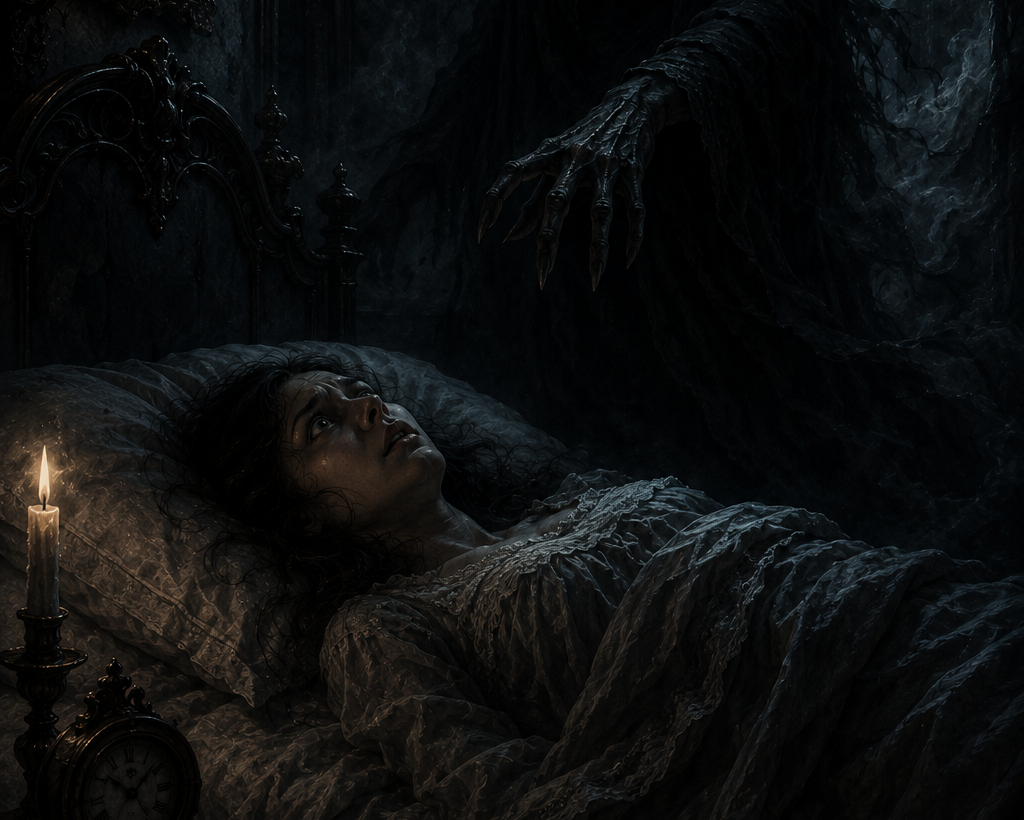
Sleep paralysis is one of the most unsettling experiences a person can have. Many individuals describe waking from sleep only to discover they are completely unable to move or speak. Some report a crushing pressure on the chest, while others experience vivid hallucinations, hear footsteps or voices, or sense an unseen presence standing beside the bed. For centuries these terrifying experiences have inspired folklore, religious beliefs, psychological theories, and scientific investigation.
Modern medicine recognizes sleep paralysis as a natural sleep phenomenon, yet dream interpreters have long viewed it as carrying symbolic and psychological meaning. Whether understood through neuroscience or dream symbolism, sleep paralysis often leaves a profound emotional impact on those who experience it.
What Is Sleep Paralysis?
Sleep paralysis occurs when the brain awakens while the body remains temporarily in the muscle paralysis (REM atonia) that normally accompanies rapid eye movement (REM) sleep. During REM sleep, the brain naturally prevents most voluntary muscle movement so that individuals do not physically act out their dreams.
If consciousness returns before this paralysis ends, a person may briefly find themselves awake but unable to move, speak, or sometimes even breathe comfortably. Episodes usually last from a few seconds to several minutes.
Medical researchers have found that sleep paralysis commonly includes:
- Temporary inability to move
- Awareness of the surrounding room
- Chest pressure
- Visual hallucinations
- Auditory hallucinations
- The sensation of an unseen presence
- Fear or panic
Although frightening, isolated sleep paralysis is generally considered harmless. Episodes are more likely to occur during periods of sleep deprivation, stress, irregular sleep schedules, or sleeping on one’s back.
Scientific Understanding
Sleep researchers describe sleep paralysis as a “mixed state” in which characteristics of dreaming and wakefulness occur simultaneously. Because portions of the brain remain in a dreaming state while conscious awareness has returned, dream imagery can become projected into the waking environment.
Dr. Elizaveta Solomonova, a researcher specializing in sleep paralysis, describes it as a unique hybrid state between dreaming and waking that offers insight into consciousness itself. Rather than representing supernatural activity, neuroscience suggests that the frightening visions arise because REM dream imagery briefly overlaps with wakefulness.
Researchers estimate that approximately 20–30% of people experience at least one episode of sleep paralysis during their lifetime, although frequency varies considerably among individuals. Episodes appear more common in students, shift workers, and people experiencing chronic stress or disrupted sleep schedules.
Sigmund Freud’s Perspective
Although Sigmund Freud did not specifically develop a theory of sleep paralysis, his dream psychology provides an interesting framework for interpreting such experiences.
Freud believed dreams represented symbolic expressions of unconscious conflict, hidden desires, fears, and unresolved emotional tension. Within a Freudian interpretation, paralysis during a dream-like state may symbolize emotional inhibition or psychological repression.
The inability to move may reflect situations in waking life where the dreamer feels unable to express thoughts, confront problems, or escape difficult circumstances. The frightening presence often reported during sleep paralysis could represent internalized fears or emotional conflicts emerging from the unconscious.
Freud regarded dreams as meaningful psychological expressions rather than random mental activity, making sleep paralysis a potential reflection of intense emotional stress.
Carl Jung’s Perspective
Carl Jung viewed dreams as communications from the unconscious mind intended to guide psychological development.
From a Jungian perspective, sleep paralysis represents more than fear. It may symbolize confrontation with the “Shadow”—those hidden aspects of personality that individuals ignore, suppress, or refuse to acknowledge.
Many reports of dark figures or mysterious presences during sleep paralysis resemble archetypal images discussed throughout Jung’s writings. These experiences may reflect encounters with unresolved fears, grief, guilt, or neglected parts of one’s personality.
Rather than interpreting these visions literally, Jung would likely encourage dreamers to explore what emotional or psychological issues these frightening figures symbolize.
Ibn Sirin’s Interpretation
Traditional interpretations attributed to Ibn Sirin often associated dreams involving immobility, restriction, or inability to act with feelings of burden, oppression, hardship, or spiritual testing.
Although classical Islamic texts do not specifically discuss modern medical sleep paralysis, symbolic interpretations suggest that being unable to move may reflect situations in which the dreamer feels restricted by responsibilities, anxiety, or external pressures.
Some traditional scholars viewed frightening dream experiences as reminders to strengthen one’s spiritual life, seek peace of mind, and avoid becoming consumed by fear or excessive worry.
Artemidorus of Daldis
The Greek dream interpreter Artemidorus believed dreams reflected the dreamer’s present circumstances and possible future developments.
Physical restraint within dreams often symbolized obstacles preventing progress toward important goals. An inability to move could therefore represent social pressure, personal limitations, or external circumstances interfering with ambition.
Within his interpretive framework, the frightening emotional intensity of paralysis would likely emphasize the seriousness of the obstacle rather than predict literal danger.
Ann Faraday’s Perspective
Modern dream analyst Ann Faraday emphasized that emotions experienced within dreams often provide the greatest clues to interpretation.
Rather than asking, “What does paralysis always mean?” Faraday encouraged dreamers to ask:
- What emotions dominated the experience?
- What events are occurring in my waking life?
- Where do I feel powerless?
- What responsibilities feel overwhelming?
Faraday believed dreams help individuals process emotional experiences that may not receive adequate attention during waking life. Sleep paralysis may therefore reflect emotional overload, burnout, unresolved anxiety, or fear rather than supernatural phenomena.
The Joseph Dream Catcherz Interpretation
According to Joseph Dream Catcherz, sleep paralysis symbolizes overwhelming stress combined with a profound feeling of powerlessness.
This interpretation views the temporary inability to move as a symbolic representation of the dreamer’s emotional condition during daily life. The subconscious transforms psychological pressure into physical paralysis, illustrating how responsibilities, worries, and obligations have become so overwhelming that the individual feels unable to move forward.
Common sources include:
- Financial pressure
- Career demands
- Relationship conflict
- Family responsibilities
- Academic stress
- Emotional exhaustion
- Major life transitions
Within the Joseph Dream Catcherz interpretation, the dreamer’s greatest struggle is not merely stress itself but the belief that these stressors are beyond personal control.
The sensation of being trapped, unable to move, or unable to cry out mirrors the emotional experience of feeling overwhelmed by circumstances that appear impossible to manage.
Likewise, the mysterious figures frequently reported during sleep paralysis are viewed as symbolic manifestations of accumulated fears rather than literal entities. The subconscious gives emotional burdens a visible form, allowing the dreamer to confront internal anxieties through dream imagery.
Rather than predicting danger, these experiences serve as signals that emotional balance has become disrupted and that meaningful attention should be given to stress management, rest, and psychological well-being.
Common Sleep Paralysis Experiences
Although each episode is unique, many individuals report remarkably similar experiences:
- A shadow standing beside the bed
- Someone sitting on the chest
- Difficulty breathing
- Hearing footsteps or whispers
- Feeling watched
- An inability to scream
- A sensation of floating
- Believing someone is in the room
Medical researchers explain these experiences as dream imagery overlapping with conscious awareness, while psychological interpretations often view them as symbolic representations of fear and emotional distress.
Managing Sleep Paralysis
Although frightening, sleep paralysis is usually temporary and manageable. Sleep specialists commonly recommend:
- Maintaining a consistent sleep schedule
- Reducing sleep deprivation
- Managing stress
- Limiting caffeine before bedtime
- Improving sleep hygiene
- Seeking medical evaluation if episodes become frequent or are accompanied by excessive daytime sleepiness
For many individuals, reducing stress and improving sleep quality significantly decreases the frequency of episodes.
Conclusion
Sleep paralysis stands at the fascinating intersection of neuroscience, psychology, and dream interpretation. Scientific research explains the condition as a temporary overlap between REM sleep and wakefulness, while dream theorists view it as a symbolic reflection of emotional struggle, psychological conflict, and personal transformation.
Freud saw dreams as expressions of unconscious conflict. Jung viewed frightening dream imagery as encounters with the deeper self. Ibn Sirin interpreted restriction as a symbol of hardship and burden. Artemidorus connected immobility with life’s obstacles, while Ann Faraday emphasized the emotional context surrounding every dream.
According to Joseph Dream Catcherz, sleep paralysis reflects overwhelming stress and the painful feeling that life’s pressures have become impossible to control. The subconscious mind transforms this emotional burden into a vivid physical experience, encouraging the dreamer to recognize the weight they are carrying and begin restoring balance before emotional exhaustion becomes overwhelming.
References
- Faraday, Ann. The Dream Game.
- Freud, Sigmund. The Interpretation of Dreams.
- Jung, Carl G. Man and His Symbols.
- Artemidorus of Daldis. Oneirocritica.
- Ibn Sirin. Dream Interpretations (traditional compilations).
- Solomonova, Elizaveta. Sleep Paralysis: Phenomenology, Neurophysiology and Treatment.