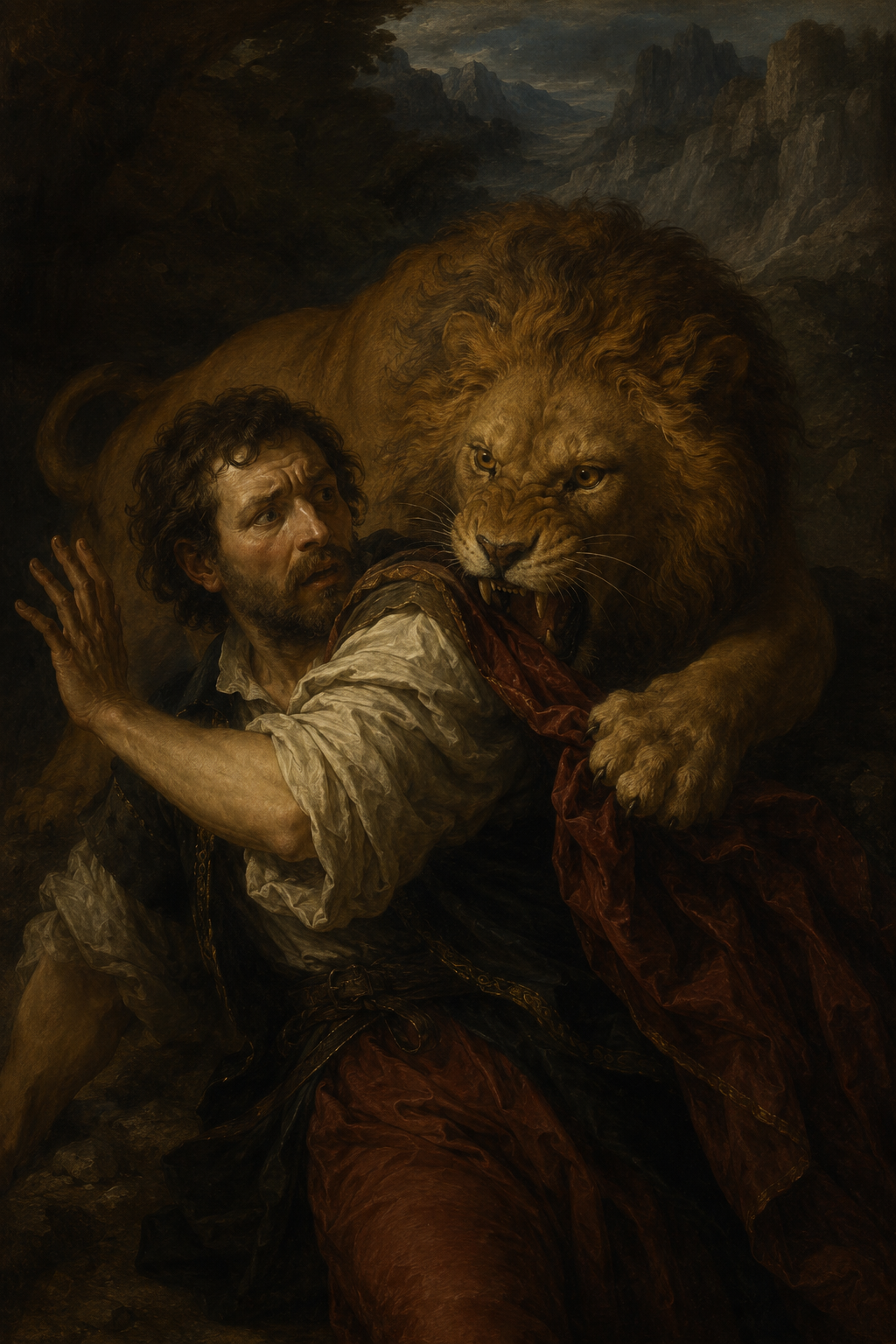
Being attacked by an animal can be one of the most frightening experiences within a dream. A peaceful dream can suddenly transform into a desperate attempt to escape a lion, bear, wolf, dog, snake, shark, or another threatening creature. Even after awakening, the fear created by the encounter may remain remarkably vivid.
Animals have carried powerful symbolic meanings throughout human history. They can represent strength, instinct, danger, protection, aggression, wisdom, sexuality, independence, and the untamed forces of nature. When an animal becomes aggressive within a dream, however, its symbolism changes dramatically.
An animal attack does not necessarily predict that something bad will happen. Instead, the imagery may reflect fear, emotional conflict, instinctive reactions, vulnerability, or circumstances that the dreamer feels unable to control.
The meaning becomes even clearer when the dreamer considers what animal attacked, how threatening it appeared, whether escape was possible, and what emotions were experienced during the encounter.
Sigmund Freud: Animal Attacks and the Unconscious
Sigmund Freud regarded dreams as an important pathway into unconscious psychological processes. In The Interpretation of Dreams, Freud argued that dream imagery cannot simply be assigned a universal meaning; interpretation depends heavily upon the dreamer’s memories, associations, desires, conflicts, and experiences.
From a Freudian perspective, a threatening animal could therefore represent something psychologically disturbing that has been transformed into symbolic imagery.
An aggressive animal might express suppressed fear, anxiety, anger, conflict, or an instinctive impulse that the conscious mind finds uncomfortable. The attack itself can be understood as a confrontation with psychological material that has become difficult to ignore.
The identity of the animal is particularly important.
Someone terrified of dogs because of a childhood experience would have very different associations with an attacking dog than someone who considers dogs symbols of loyalty and protection.
Freud’s approach therefore encourages the dreamer to ask not simply “What does this animal mean?” but “What does this particular animal mean to me?”
Freud’s later work on traumatic and repetitive dreams also complicated his earlier emphasis on dreams as wish fulfillment. Distressing dreams demonstrated that dreams can repeatedly return the mind to frightening or emotionally painful material.
Carl Jung: Confrontation With the Instinctive Self
Carl Gustav Jung gave animals an especially important place within dream symbolism.
Within Jungian thought, animals can represent instinctive aspects of human nature—the primitive, emotional, intuitive, and uncontrolled forces that exist beneath ordinary conscious behavior.
Being attacked by an animal may therefore symbolize a confrontation with an instinct, emotion, or aspect of the personality that the dreamer has rejected or failed to acknowledge.
The attacking animal might represent anger that has been suppressed, fear that has been avoided, powerful desires, or another part of the unconscious demanding recognition.
A wild animal can become especially significant because it exists beyond ordinary human control. The dreamer may consciously believe that everything is under control while the unconscious produces a powerful animal demonstrating otherwise.
The dream is therefore not necessarily portraying the animal as evil. Instead, the attack may represent a conflict between conscious identity and deeper instinctive forces.
Jung’s approach also makes the characteristics of the animal important. A snake, wolf, lion, bear, bird, or horse carries different personal, cultural, and archetypal associations.
The entire dream must be considered rather than interpreting the animal independently.
Ibn Sirin: Dangerous Animals, Enemies, and Adversity
Within the Islamic dream-interpreting tradition associated with Ibn Sirin, dangerous animals are frequently interpreted according to the characteristics traditionally associated with the particular creature.
Wild or threatening animals may represent enemies, powerful opponents, hardship, danger, authority, or circumstances that threaten the dreamer’s security.
The outcome of the encounter becomes particularly significant.
Escaping from an attacking animal can traditionally signify escaping danger or overcoming an adversary. Being injured or overwhelmed can suggest difficulties involving an opponent or challenging circumstances.
However, caution is important when discussing Ibn Sirin. Many dream dictionaries circulating under his name were compiled or transmitted after his lifetime, so individual interpretations should be described as belonging to the tradition attributed to Ibn Sirin, rather than automatically assuming every modern entry was written personally by him.
As with other traditional systems, the type of animal, the dreamer’s circumstances, and the outcome of the encounter affect the interpretation.
Artemidorus of Daldis: Animals as Threatening People and Circumstances
Artemidorus of Daldis devoted substantial attention to animals in his Oneirocritica, one of the most extensive surviving dream manuals from antiquity. His second book examines both domestic and wild animals and connects their meanings to their characteristics and the dreamer’s circumstances.
Artemidorus frequently connected wild animals with enemies or threatening individuals. For example, his interpretations associate the wolf with a violent enemy and the fox with an opponent who operates through deception rather than open confrontation.
Therefore, being pursued or attacked by a dangerous animal could symbolize confrontation with a hostile person, opponent, or threatening external circumstance.
Yet Artemidorus did not advocate interpreting dreams without considering the dreamer. Occupation, social position, health, age, habits, and personal circumstances could alter a dream’s meaning.
A lion attacking a ruler, merchant, traveler, or ordinary citizen would not necessarily have precisely the same significance.
Ann Faraday: What Does the Animal Mean to You?
Ann Faraday emphasized the dreamer’s personal associations when interpreting dream imagery.
Rather than immediately searching for a fixed definition of an attacking animal, Faraday’s approach encourages the dreamer to examine the emotional and personal context surrounding it.
Important questions include:
What animal attacked me?
How do I feel about this animal while awake?
What was I doing immediately before the attack?
Did I run, hide, fight, freeze, or surrender?
What situation in my waking life produces a similar feeling?
The last question can be particularly revealing.
If the dominant emotion during the attack was helplessness, the dreamer should consider where helplessness currently exists within waking life. If the dominant emotion was anger, the animal may be connected to a different psychological concern.
From this perspective, understanding the emotion can sometimes be more valuable than consulting a predetermined symbolic definition.
The Joseph Dream Catcherz Interpretation: Fear of the Unknown and Helplessness
According to the original interpretive philosophy of Joseph Dream Catcherz, being attacked by an animal within a dream primarily represents fear of the unknown and feelings of helplessness.
An animal is especially effective at representing these emotions because its intentions cannot always be understood.
When confronted by a wild animal, we cannot negotiate with it or necessarily predict what it will do next. The subconscious can use this uncertainty to visualize circumstances in waking life where the dreamer does not know what is coming or does not believe they have sufficient control over the outcome.
The attacking animal may therefore represent the fear itself rather than an actual person or event.
The dreamer may be confronting uncertainty involving employment, finances, relationships, family, an important decision, an upcoming event, or another unresolved situation.
Something feels threatening—but the dreamer does not yet know exactly what will happen.
That uncertainty becomes the animal.
The Bigger the Animal, the Bigger the Feeling
An important part of the Joseph Dream Catcherz interpretation is the size and perceived power of the attacking animal.
The larger and more intimidating the animal appears, the stronger the feelings of fear and helplessness may be.
Being attacked by a small animal may represent an irritating or manageable concern that nevertheless makes the dreamer uncomfortable.
Being chased by an enormous bear, lion, elephant, shark, or similarly powerful creature may represent a problem the dreamer perceives as enormous.
The animal’s size does not necessarily indicate the actual seriousness of the waking-life problem.
Instead, it represents how large the problem feels to the dreamer.
This distinction is important. A relatively minor situation can produce enormous anxiety when a person believes they have little control over its outcome.
The dream reflects emotional magnitude rather than objectively measuring danger.
Running From the Animal
Running away may indicate an attempt to avoid uncertainty.
The dreamer recognizes that something is troubling them but does not yet feel prepared to confront it.
If the animal continues pursuing the dreamer regardless of where they hide, the dream may suggest that the underlying concern continues returning to conscious awareness despite attempts to avoid thinking about it.
Being Unable to Move
If the dreamer freezes while the animal approaches, the symbolism of helplessness becomes even stronger.
The person recognizes the threat but feels incapable of responding.
This may mirror a waking situation in which the dreamer believes there are few good options available.
Fighting Back
Fighting the animal changes the emotional character of the dream.
The fear remains present, but the dreamer has begun resisting it.
Within the Joseph Dream Catcherz interpretation, fighting back may represent increasing determination to confront a problem instead of remaining helpless before it.
Defeating the Animal
Successfully defeating or driving away the attacking animal may represent a significant psychological change.
The problem that once appeared overwhelming is beginning to feel manageable.
The dreamer is no longer simply running from uncertainty but confronting it.
Escaping the Animal
Escape can similarly represent relief.
The subconscious may be recognizing that the feared situation does not have complete control over the dreamer’s life.
The manner of escape can provide additional clues. Finding shelter, receiving help, climbing to safety, or simply outrunning the animal may each reflect different ways the dreamer believes the problem can be overcome.
Different Animals Can Change the Meaning
Although the attack itself represents an important part of the dream, the identity of the animal should never be ignored.
A dog may carry associations involving loyalty, friendship, protection, or betrayal.
A wolf may suggest danger, independence, aggression, or something operating beyond familiar boundaries.
A lion may represent power, authority, dominance, or overwhelming strength.
A bear may represent enormous physical or emotional power.
A snake may evoke hidden danger, transformation, fear, or uncertainty.
A shark may intensify feelings of vulnerability because the dreamer is confronting danger in an environment where humans have limited control.
A dreamer’s personal experiences with these animals remain more important than any universal definition.
The Emotional Size of the Animal
One of the most useful questions after an animal-attack dream may therefore be:
How powerful did the animal feel compared with me?
A gigantic animal towering over the dreamer creates an entirely different psychological experience from a small creature that can easily be pushed away.
According to Joseph Dream Catcherz, this difference provides an important clue to the emotional intensity behind the dream.
The subconscious has essentially given fear a physical body.
The greater the fear, the greater the beast may become.
Conclusion
Dreams of being attacked by animals combine some of humanity’s oldest fears: vulnerability, unpredictability, loss of control, and confrontation with something more powerful than ourselves.
Freud directs attention toward unconscious conflict and personal associations. Jung emphasizes instinctive and unconscious aspects of the psyche. The tradition attributed to Ibn Sirin frequently connects dangerous animals with adversity and opponents. Artemidorus explicitly associates various wild animals with enemies and threatening circumstances, while Faraday’s approach directs attention back toward the dreamer’s individual emotions and associations.
The Joseph Dream Catcherz interpretation adds another perspective: the attacking animal represents fear of the unknown and the helplessness created by uncertainty.
Most importantly, the animal’s size and power may reveal the emotional magnitude of that fear.
A small animal may represent a relatively small concern.
A massive animal may represent a situation that feels overwhelming.
And when the dreamer finally stops running and confronts the animal, the dream may be revealing something equally important:
Fear may still exist, but helplessness is beginning to disappear.
Bibliography
Artemidorus of Daldis. The Interpretation of Dreams (Oneirocritica). Translated by Robert J. White. Original work composed in the second century CE.
Faraday, Ann. The Dream Game. Harper & Row, 1972.
Freud, Sigmund. The Interpretation of Dreams. Originally published 1900.
Freud, Sigmund. Beyond the Pleasure Principle. Originally published 1920.
Jung, C. G. Man and His Symbols. Doubleday, 1964.
Jung, C. G. The Archetypes and the Collective Unconscious. Collected Works of C. G. Jung, Vol. 9, Part 1. Princeton University Press.
Thonemann, Peter. An Ancient Dream Manual: Artemidorus’ The Interpretation of Dreams. Oxford University Press, 2020.
Traditional works attributed to Ibn Sirin, including later compilations of Islamic dream interpretation associated with his name.
JoesphDream.com. “Being Attacked by an Animal Within Dreams: The Joseph Dream Catcherz Interpretation.” Joseph Dream Catcherz, 2026. Original interpretive perspective on fear of the unknown, helplessness, and the relationship between an attacking animal’s perceived size and the emotional intensity experienced by the dreamer.
Peace and Blessings-

Leave a Reply
You must be logged in to post a comment.