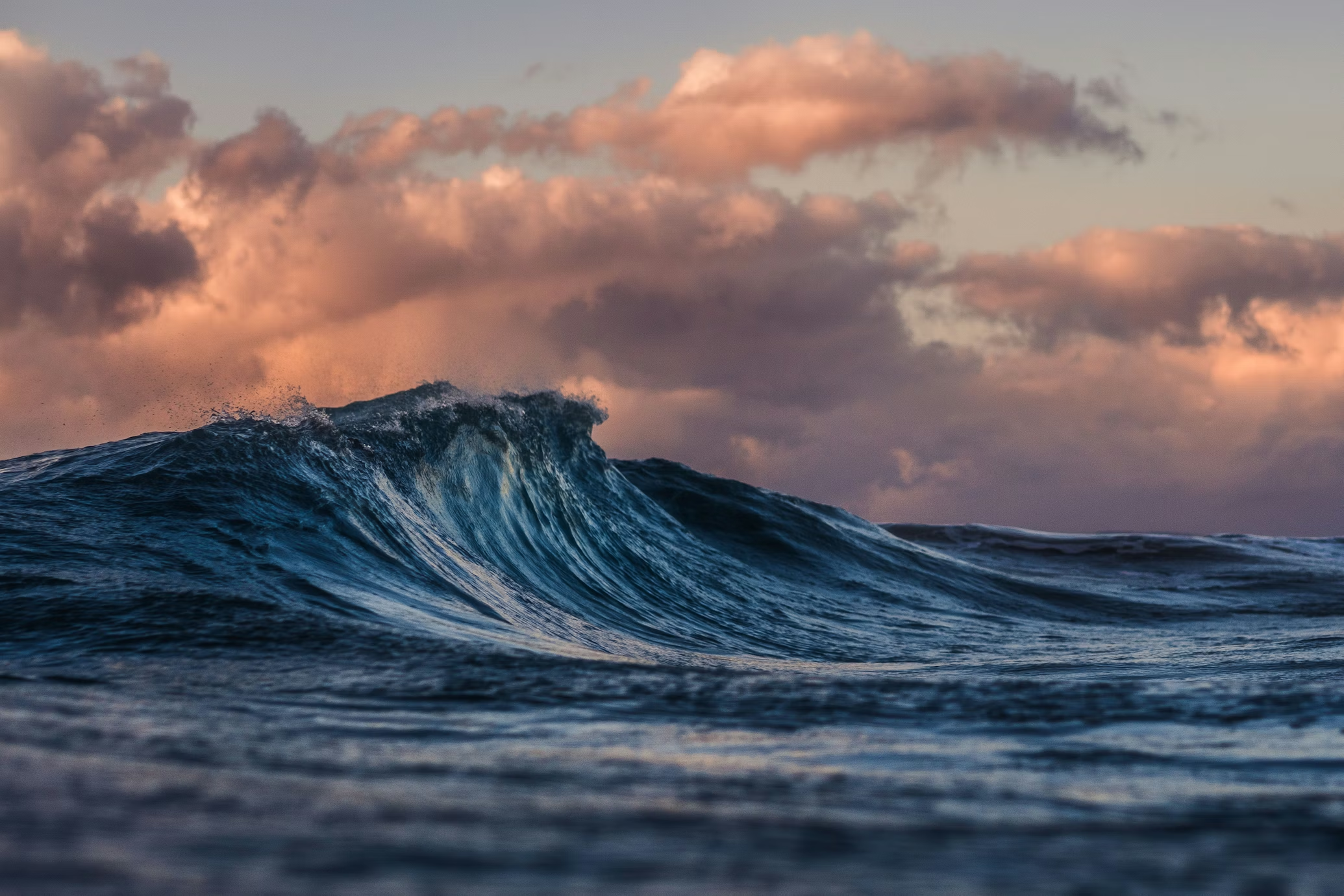
“YOU CAN EITHER SEE YOURSELF AS A WAVE IN THE OCEAN…
OR YOU CAN SEE YOURSELF AS THE OCEAN”
–Oprah Winfrey

The ocean covers over 70% of Earth’s surface and has been central to human survival, exploration, trade, and imagination. It is both a life-sustaining environment and a powerful symbol of mystery, depth, and transformation
Oceans: A Scientific, Cultural, Religious, Mythological, and Environmental Summary
Oceans are the largest and most dynamic ecosystems on Earth, covering approximately 71 percent of the planet’s surface and containing about 97 percent of Earth’s water. They regulate climate, produce much of the world’s oxygen, support countless forms of life, and have shaped the development of civilizations for thousands of years. Beyond their physical importance, oceans have inspired myths, religions, exploration, literature, and art, often symbolizing mystery, power, life, and the unknown.
Scientific Importance
The world’s oceans form one interconnected body of saltwater traditionally divided into five major oceans: the Pacific, Atlantic, Indian, Southern, and Arctic Oceans.
Scientists estimate that millions of marine species inhabit the oceans, ranging from microscopic plankton to the blue whale, the largest animal known to have lived. Coral reefs, kelp forests, mangrove ecosystems, deep-sea hydrothermal vents, and open-ocean habitats each support highly specialized forms of life.
Oceans play a critical role in regulating Earth’s climate. Ocean currents distribute heat around the globe, influencing weather patterns, seasonal temperatures, and rainfall. The oceans also absorb significant amounts of atmospheric carbon dioxide and store vast quantities of heat, helping moderate global climate.
Marine phytoplankton, tiny photosynthetic organisms drifting near the ocean’s surface, produce a substantial portion of the oxygen in Earth’s atmosphere while serving as the foundation of most marine food webs.
Despite centuries of exploration, much of the deep ocean remains poorly understood. Extreme pressure, darkness, and vast distances make deep-sea research one of science’s greatest ongoing challenges, with new species continuing to be discovered.
Historical Significance
Throughout history, oceans have connected civilizations, enabled trade, and inspired exploration.
Ancient cultures relied on coastal waters for fishing, transportation, and commerce. Civilizations such as the Egyptians, Phoenicians, Greeks, Polynesians, Chinese, and Vikings developed advanced methods of navigation that allowed them to explore distant lands and establish trade networks.
During the Age of Exploration, voyages across the Atlantic, Pacific, and Indian Oceans transformed world history by linking continents through trade, migration, colonization, and cultural exchange. Oceans became the highways of global commerce, carrying goods, ideas, technologies, and people across vast distances.
Naval power also became central to the rise of many empires, making control of the seas an important element of military and political influence.
Religious Significance
Many religions regard oceans as symbols of creation, divine power, purification, mystery, and transformation.
Christianity
The Bible frequently refers to the sea as both a source of life and a place demonstrating God’s power over creation. Jesus performed several miracles associated with the Sea of Galilee, including calming a storm and walking on water. Water also symbolizes cleansing, renewal, and spiritual rebirth through baptism.
Judaism
In Jewish tradition, the sea often represents both chaos and God’s sovereign authority. The crossing of the Red Sea during the Exodus is one of the central events in Jewish history, symbolizing liberation, faith, and divine deliverance.
Islam
The Qur’an frequently encourages reflection upon the oceans as signs of God’s creative wisdom and sustaining power. The sea is presented as a source of food, transportation, and evidence of divine design, while also reminding humanity of God’s authority over nature.
Hinduism
The ocean occupies an important place in Hindu cosmology. One of the most famous stories is the Churning of the Ocean of Milk, in which gods and demons cooperated to obtain the nectar of immortality. Oceans are also associated with sacred rivers, purification, and cosmic creation.
Buddhism
While oceans appear less prominently as sacred places, Buddhist teachings often use the sea as a metaphor for the vastness of wisdom, compassion, and enlightenment. The waves of the ocean are sometimes compared to changing thoughts and emotions, while the deep water symbolizes inner peace and ultimate truth.
Mythological Significance
Nearly every civilization developed myths centered on the sea.
In Greek mythology, Poseidon ruled the oceans, storms, earthquakes, and horses. Sailors often sought his protection before long voyages.
Roman mythology identified Neptune as the ruler of the seas, sharing many characteristics with Poseidon.
Norse mythology includes powerful sea giants and deities associated with storms, fishing, and ocean voyages. The sea was viewed as both life-giving and unpredictable.
Ancient Polynesian traditions celebrate legendary navigators who crossed vast stretches of ocean using stars, currents, winds, and bird migrations. The ocean was viewed not as a barrier but as a living pathway connecting islands and communities.
Many cultures also developed legends of sea serpents, mermaids, underwater kingdoms, ghost ships, and mysterious islands, reflecting both fascination with and respect for the ocean’s immense power and unknown depths.
Cultural Importance
The ocean has profoundly influenced human culture, economy, and identity.
Coastal communities have long depended upon fishing, shipping, tourism, and maritime trade for their livelihoods. Ports became centers of commerce where languages, religions, foods, and customs blended through international exchange.
The sea has inspired countless works of literature, music, painting, film, and folklore. Writers often use the ocean to symbolize adventure, freedom, longing, isolation, uncertainty, or personal transformation.
In many cultures, the ocean also serves as a place of recreation, celebration, and remembrance. Festivals honoring fishermen, blessings of fleets, surfing traditions, sailing competitions, and beach gatherings continue to reflect humanity’s close relationship with the sea.
Environmental Importance
Healthy oceans are essential for life on Earth.
Marine ecosystems regulate climate, recycle nutrients, absorb carbon dioxide, produce oxygen, and support global food supplies. Countless species depend upon coral reefs, mangroves, estuaries, seagrass meadows, and deep-sea habitats for survival.
However, oceans face significant environmental challenges.
Plastic pollution has become widespread, with millions of tons of waste entering marine environments each year. Overfishing has reduced many fish populations, while destructive fishing practices damage fragile ecosystems.
Climate change is warming ocean waters, contributing to coral bleaching, rising sea levels, changing weather patterns, and shifts in marine biodiversity. Ocean acidification, caused by increased absorption of carbon dioxide, threatens shell-forming organisms and coral reef ecosystems.
Conservation efforts include marine protected areas, sustainable fisheries, habitat restoration, pollution reduction, and international cooperation aimed at preserving marine biodiversity for future generations.
Exploration and Discovery
The ocean remains one of Earth’s last great frontiers.
Modern technologies such as remotely operated vehicles, autonomous underwater drones, satellite mapping, and deep-sea submersibles continue to reveal previously unknown landscapes and species. Scientists regularly discover new organisms, underwater volcanoes, hydrothermal vents, and ancient shipwrecks hidden beneath the sea.
Researchers believe that understanding the oceans will be essential for addressing future challenges involving climate, biodiversity, medicine, food security, and sustainable resource management.
Symbolic Meaning
Across cultures and throughout history, oceans symbolize both creation and mystery. They represent life’s origins, limitless possibility, emotional depth, renewal, exploration, and the unknown. Calm seas often symbolize peace, hope, and stability, while turbulent waters may represent uncertainty, struggle, or the immense forces of nature.
Because the horizon stretches beyond human sight, the ocean also symbolizes discovery and the continual search for knowledge. Its tides remind humanity of nature’s rhythms, while its vastness inspires humility and wonder.
Across science, religion, mythology, culture, and environmental studies, the ocean remains one of Earth’s greatest treasures. It sustains life, connects continents, inspires imagination, and reminds humanity of both the beauty and fragility of the natural world. Protecting the oceans is not only an environmental responsibility but also a commitment to preserving one of the planet’s most essential and awe-inspiring resources.

Sigmund Freud on the Representation of Oceans Within Dreams
Sigmund Freud believed that dreams are disguised fulfillments of unconscious wishes, expressing repressed emotions, unresolved childhood experiences, instinctive drives, and internal psychological conflicts. In The Interpretation of Dreams, he argued that dream symbols should never be interpreted according to rigid universal definitions. Instead, every dream image derives its meaning from the dreamer’s personal memories, emotional associations, cultural background, and life experiences. Through the mechanisms of condensation, displacement, symbolization, and wish fulfillment, ordinary images acquire profound psychological significance.
Freud did not assign a fixed symbolic meaning to oceans appearing in dreams. However, throughout his writings he frequently associated water with unconscious emotional life, birth symbolism, early childhood experiences, instinctive drives, and deep psychological processes. Depending upon the dreamer’s personal associations, an ocean may symbolize the unconscious mind, overwhelming emotions, the maternal relationship, emotional security, fear of the unknown, repressed desires, longing for freedom, or unresolved internal conflict.
For Freud, the proper question is not “What does the ocean always represent?” but “What memories, emotions, wishes, or conflicts does this ocean awaken within the dreamer?”
The Ocean as a Symbol of the Unconscious
Freud regarded dreams as expressions of unconscious mental activity.
An ocean may symbolize:
- Hidden emotions
- Repressed memories
- Unconscious wishes
- Internal conflict
- Emotional depth
- Psychological complexity
The immense size of the ocean reflects aspects of mental life that remain largely outside conscious awareness.
The Ocean and Early Childhood
Freud believed that many dream symbols originate in early childhood experiences.
The ocean may symbolize:
- Infantile dependency
- Feelings of safety
- Early emotional bonds
- Childhood memories
- Emotional nourishment
- Psychological regression
Because life begins within the protective environment of the womb, large bodies of water may also evoke unconscious memories associated with security and dependence.
The Ocean and the Maternal Relationship
Freud frequently connected water imagery with maternal symbolism.
Depending upon the dreamer’s personal associations, the ocean may symbolize:
- The mother
- Emotional protection
- Nurturing
- Dependence
- Comfort
- Separation anxiety
The dream may reflect unresolved feelings regarding early maternal relationships.
The Ocean and Wish Fulfillment
Dreams often provide symbolic satisfaction for wishes that cannot easily be fulfilled during waking life.
An ocean may represent wishes involving:
- Freedom
- Escape
- Peace
- Emotional release
- Adventure
- Reconciliation
The unconscious may use the vastness of the sea as an image of limitless possibility.
Common Dream Scenarios Involving Oceans
Calm Ocean
A calm ocean may symbolize:
- Emotional stability
- Temporary psychological balance
- Inner peace
- Satisfaction
- Emotional reassurance
- Fulfillment of unconscious wishes
The dream may reflect a period of relative emotional harmony.
Stormy Ocean
A turbulent ocean may symbolize:
- Anxiety
- Emotional conflict
- Repressed anger
- Fear
- Psychological tension
- Unresolved desires
The violent sea often reflects unconscious emotions demanding recognition.
Swimming in the Ocean
Swimming may symbolize:
- Immersion in emotional experience
- Exploration of unconscious material
- Adaptation
- Emotional resilience
- Personal struggle
- Psychological engagement
The dream reflects the dreamer’s attempt to navigate emotional life.
Drowning in the Ocean
Drowning may symbolize:
- Feeling overwhelmed
- Loss of emotional control
- Fear of unconscious impulses
- Anxiety
- Helplessness
- Internal conflict
The dream often expresses distress arising from emotions that feel too powerful to manage.
Standing on the Shore
Standing beside the ocean may symbolize:
- Reflection
- Hesitation
- Curiosity
- Anticipation
- Emotional observation
- Readiness for change
The shoreline represents the meeting point between conscious awareness and deeper emotional life.
The Ocean and Repressed Emotion
Freud believed that dreams reveal emotions hidden from conscious awareness.
An ocean may symbolize:
- Fear
- Love
- Grief
- Desire
- Loneliness
- Emotional longing
The depth of the sea reflects the depth of unconscious feeling.
The Ocean and Condensation
Freud described condensation as the process through which multiple meanings merge into a single dream image.
An ocean may simultaneously represent:
- A childhood memory
- A parent
- Emotional security
- Fear
- Freedom
- Repressed wishes
Several psychological associations become united within one symbolic landscape.
Emotional Responses to the Ocean
Freud considered emotional reactions among the most important elements of dream interpretation.
Feeling Peaceful
May symbolize:
- Emotional comfort
- Wish fulfillment
- Psychological relief
- Security
Feeling Fear
May symbolize:
- Anxiety
- Repressed conflict
- Fear of losing control
- Uncertainty regarding unconscious impulses
Feeling Wonder
May symbolize:
- Curiosity
- Desire for self-understanding
- Hope
- Emotional openness
Feeling Trapped
May symbolize:
- Emotional dependency
- Internal conflict
- Fear of change
- Unresolved psychological tension
The dreamer’s emotional response frequently reveals more than the ocean itself.
The Ocean and Psychological Development
Dreams involving oceans frequently appear during periods of emotional transition.
The ocean may symbolize:
- Emotional growth
- Resolution of childhood conflicts
- Greater self-understanding
- Acceptance of unconscious material
- Personal change
- Psychological maturity
The unconscious presents the ocean as a setting in which emotional conflicts can be explored and gradually resolved.
Key Themes Associated with Oceans
- The unconscious
- Emotional depth
- Childhood memories
- Maternal relationship
- Wish fulfillment
- Repressed emotions
- Psychological conflict
- Emotional security
- Personal growth
- Inner exploration
Conclusion
For Sigmund Freud, an ocean appearing in dreams does not possess a fixed or universal symbolic meaning. Instead, it reflects the dreamer’s unique emotional history, unconscious wishes, childhood experiences, and personal associations. Depending upon the context of the dream, the ocean may symbolize hidden emotions, maternal attachment, psychological security, fear of the unknown, or the immense depth of the unconscious mind itself. Whether the sea is calm, stormy, inviting, or overwhelming, Freud would seek to uncover the individual memories and emotional conflicts connected with its appearance through free association. Ultimately, the ocean becomes a symbolic landscape in which the unconscious expresses its deepest wishes, anxieties, and unresolved emotional experiences.
Bibliography
Sigmund Freud. The Interpretation of Dreams. 1900.
The Interpretation of Dreams.
Introductory Lectures on Psycho-Analysis. 1916–1917.
The Ego and the Id. 1923.
New Introductory Lectures on Psycho-Analysis. 1933.
Civilization and Its Discontents. 1930.
Carl Jung on the Representation of Oceans Within Dreams
Carl Jung regarded dreams as spontaneous expressions of the unconscious that seek to restore psychological balance and guide the individual toward greater wholeness. Throughout The Archetypes and the Collective Unconscious, Symbols of Transformation, Psychology and Alchemy, Aion, Mysterium Coniunctionis, and Man and His Symbols, Jung frequently described the sea and other vast bodies of water as profound symbolic images of the unconscious. Rather than assigning rigid universal meanings to every dream image, he believed that symbols reveal themselves according to the dreamer’s life circumstances, emotional state, and stage of psychological development.
Among natural symbols, the ocean occupies a central place within Jungian psychology. It commonly represents the collective unconscious, the depths of the psyche, transformation, psychological potential, the source of life, the unknown, archetypal wisdom, and the continual process of individuation. Its vastness reflects the immense psychological reality that extends far beyond the conscious ego.
For Jung, dreaming of the ocean often indicates that the unconscious is inviting the dreamer to explore deeper aspects of the personality and move toward greater psychological integration.
The Ocean as the Collective Unconscious
One of Jung’s most enduring ideas is the collective unconscious, a universal layer of the psyche shared by all humanity.
The ocean may symbolize:
- The collective unconscious
- Universal human experience
- Archetypal wisdom
- Hidden psychological potential
- Ancient memory
- The foundation of the psyche
Its immeasurable depth reflects the limitless nature of unconscious life.
The Ocean and the Self
Jung regarded the Self as the central archetype that organizes and unifies the personality.
The ocean may symbolize:
- The Self
- Psychological wholeness
- Inner completeness
- Personal integration
- Authentic identity
- Spiritual center
The dream suggests that the ego is being drawn toward a deeper relationship with the organizing center of the psyche.
The Ocean and Individuation
Jung described individuation as the lifelong journey toward becoming a psychologically complete individual.
The ocean may symbolize:
- Personal transformation
- Emotional maturity
- Self-discovery
- Integration of unconscious material
- Psychological growth
- Expansion of consciousness
Entering or approaching the ocean often represents willingness to engage this transformative process.
The Ocean and Transformation
Water frequently symbolizes change and renewal within Jung’s writings.
The ocean may represent:
- Rebirth
- Renewal
- Healing
- Inner change
- Psychological evolution
- Creative potential
The unconscious presents the ocean as a place where the old personality gives way to new development.
Common Dream Scenarios Involving Oceans
A Calm Ocean
A peaceful ocean may symbolize:
- Psychological balance
- Emotional harmony
- Trust in the unconscious
- Inner stability
- Acceptance
- Wholeness
The dream reflects successful cooperation between conscious awareness and unconscious processes.
A Stormy Ocean
A turbulent ocean may symbolize:
- Emotional upheaval
- Psychological conflict
- Powerful unconscious forces
- Resistance to change
- Transformation in progress
- Emerging unconscious material
Storms often indicate that the psyche is attempting to reorganize itself during periods of significant growth.
Swimming in the Ocean
Swimming may symbolize:
- Active engagement with the unconscious
- Personal courage
- Emotional exploration
- Psychological development
- Adaptation
- Growth
The dream reflects conscious participation in the individuation process.
Diving Beneath the Surface
Diving beneath the water may symbolize:
- Exploration of unconscious depths
- Discovery of hidden aspects of the personality
- Encounter with archetypes
- Search for inner wisdom
- Transformation
- Self-knowledge
The descent reflects the ego’s willingness to encounter deeper layers of the psyche.
Standing on the Shore
The shoreline represents the meeting place between the conscious mind and the unconscious.
Standing beside the ocean may symbolize:
- Reflection
- Readiness for change
- Curiosity
- Anticipation
- Observation
- Preparation for psychological growth
The dream often marks the beginning of an important developmental journey.
The Ocean and Archetypal Symbols
The ocean frequently serves as the setting from which archetypal figures emerge.
It may symbolize the realm of:
- The Great Mother
- The Shadow
- The Wise Old Man
- The Divine Child
- The Hero
- The Self
The dream suggests that archetypal energies are becoming active within the dreamer’s psychological life.
The Ocean and Creative Energy
Jung believed the unconscious is a source of creativity.
The ocean may symbolize:
- Imagination
- Inspiration
- Creative renewal
- Intuition
- Hidden talents
- Untapped potential
Dreams of the ocean often encourage exploration of one’s creative capacities.
Emotional Responses to the Ocean
Jung regarded emotional reactions as indispensable to dream interpretation.
Feeling Peaceful
May symbolize:
- Psychological harmony
- Trust
- Integration
- Acceptance of unconscious life
Feeling Awe
May symbolize:
- Recognition of the vastness of the psyche
- Encounter with archetypal reality
- Respect for the mystery of the unconscious
- Spiritual openness
Feeling Fear
May symbolize:
- Resistance to individuation
- Anxiety about unconscious material
- Uncertainty regarding transformation
- Difficulty relinquishing old patterns
Feeling Wonder
May symbolize:
- Openness to growth
- Curiosity
- Expansion of consciousness
- Readiness for psychological discovery
The emotional atmosphere reveals how the ego is responding to the unconscious invitation represented by the ocean.
The Ocean and Psychological Integration
Dreams involving oceans frequently occur during periods of significant personal development.
The ocean may symbolize:
- Integration of conscious and unconscious life
- Emotional healing
- Expanded awareness
- Greater authenticity
- Inner wisdom
- Lasting psychological balance
The dream reflects the psyche’s movement toward wholeness.
Key Themes Associated with Oceans
- Collective unconscious
- The Self
- Individuation
- Transformation
- Archetypal wisdom
- Psychological integration
- Renewal
- Creative potential
- Emotional depth
- Wholeness
Conclusion
Within Carl Jung’s analytical psychology, the ocean stands as one of the most profound symbols of the unconscious mind and the collective psychic life shared by humanity. Rather than possessing a fixed meaning independent of the dreamer, the ocean reflects the immense depths of the psyche, the process of individuation, and the continual movement toward psychological wholeness. Whether calm or stormy, explored from the shore or entered through swimming and diving, the ocean symbolizes the dreamer’s encounter with unconscious wisdom, transformative archetypal forces, and the evolving relationship between the conscious ego and the Self. Ultimately, the ocean represents both the mystery and the creative potential of the human psyche, inviting the dreamer to embrace deeper self-knowledge, emotional integration, and lifelong psychological growth.
Bibliography
Carl Jung. The Archetypes and the Collective Unconscious. 1959.
The Archetypes and the Collective Unconscious.
Symbols of Transformation. 1912/1952.
Psychology and Alchemy. 1944.
Aion. 1951.
Mysterium Coniunctionis. 1955–1956.
Man and His Symbols. 1964.
Memories, Dreams, Reflections. 1962.
Ibn Sirin on the Representation of Oceans Within Dreams
Ibn Sirin interpreted dreams within the framework of the Qur’an, the Sunnah, and the moral and spiritual condition of the dreamer. In the classical dream interpretation tradition attributed to Ibn Sirin, symbols do not possess fixed meanings independent of context. Instead, their significance depends upon the dreamer’s circumstances, emotional state, occupation, and the events taking place within the dream. Among natural symbols, the sea is one of the most frequently discussed and richly developed images in classical Islamic dream literature.
In Ibn Sirin’s tradition, the ocean or sea commonly represents great authority, power, knowledge, wealth, trials, opportunity, travel, and the immense power of God over creation. Depending upon the condition of the water and the dreamer’s interaction with it, the sea may symbolize either blessing or hardship. Calm waters often indicate stability and lawful benefit, while violent waters may represent trials, oppression, danger, or overwhelming worldly concerns.
The interpretation is determined by the dreamer’s actions within the dream as well as the overall context.
The Ocean as a Symbol of Great Authority
One of the most common interpretations of the sea is that it represents immense power or authority.
The ocean may symbolize:
- A powerful ruler
- Government
- Leadership
- Influence
- Justice
- Authority
Because of its vastness and strength, the sea reflects forces greater than the individual dreamer.
The Ocean and Divine Power
Throughout the Qur’an, the sea demonstrates God’s creative power and control over the natural world.
Accordingly, the ocean may symbolize:
- Divine majesty
- God’s mercy
- God’s power
- Human dependence upon God
- Reflection
- Reverence
Dreams involving the sea may encourage humility and trust in God’s wisdom.
The Ocean and Knowledge
Classical Islamic scholars frequently associated deep water with profound knowledge.
The ocean may symbolize:
- Wisdom
- Learning
- Religious understanding
- Intellectual growth
- Discovery
- Beneficial knowledge
A vast ocean reminds the dreamer that knowledge is abundant and requires patience to acquire.
Common Dream Scenarios Involving Oceans
Crossing the Ocean
Successfully crossing an ocean may symbolize:
- Completing a difficult undertaking
- Safe travel
- Victory over hardship
- Advancement
- Success
- Achievement
The dream often reflects perseverance rewarded with favorable outcomes.
Sailing Upon the Ocean
Traveling peacefully upon the sea may symbolize:
- Lawful prosperity
- Opportunity
- Successful commerce
- Safe journeys
- Trust in God
- Wise leadership
The dream suggests steady progress through life’s challenges.
Swimming in the Ocean
Swimming may symbolize:
- Seeking knowledge
- Entering positions of responsibility
- Engaging with powerful people
- Perseverance
- Personal effort
- Courage
If the dreamer swims confidently, the dream often points toward success despite difficulty.
Drowning in the Ocean
Drowning may symbolize:
- Overwhelming trials
- Excessive attachment to worldly matters
- Great difficulties
- Serious hardship
- Fear
- Spiritual neglect
However, classical interpretations differ depending on whether the dreamer survives, reaches shore, or is rescued, making the surrounding details essential.
Standing on the Shore
Standing beside the sea may symbolize:
- Reflection
- Opportunity
- Anticipation
- Careful planning
- Respect for powerful forces
- Readiness for change
The dream often suggests that an important opportunity lies ahead.
The Ocean and Livelihood
The sea has long been connected with trade and commerce.
The ocean may symbolize:
- Financial opportunity
- Honest work
- Prosperity
- Trade
- Provision
- Lawful earnings
Dreams involving abundant resources from the sea may indicate blessings earned through perseverance and lawful effort.
The Ocean and Trials
The sea’s immense power also represents life’s challenges.
The ocean may symbolize:
- Hardship
- Testing
- Patience
- Perseverance
- Uncertainty
- Dependence upon God
Stormy seas often remind the believer that trials are temporary and require steadfast faith.
Emotional Responses to the Ocean
The dreamer’s emotions help determine the interpretation.
Feeling Peaceful
May symbolize:
- Trust in God
- Security
- Confidence
- Blessing
Feeling Hopeful
May symbolize:
- Opportunity
- Positive expectations
- Gratitude
- Personal growth
Feeling Fear
May symbolize:
- Awareness of life’s uncertainties
- Concern regarding powerful authorities
- Spiritual weakness
- Need for greater reliance upon God
Feeling Determined
May symbolize:
- Patience
- Courage
- Readiness to face challenges
- Confidence through faith
The emotional atmosphere frequently reveals whether the dream concerns blessing, testing, or personal growth.
The Ocean and Spiritual Reflection
Beyond its practical meanings, the sea reminds believers of humanity’s dependence upon the Creator.
The ocean may symbolize:
- Humility
- Reflection
- Gratitude
- Patience
- Trust in God
- Awareness of divine greatness
Dreams involving the ocean often encourage renewed faith during periods of uncertainty.
Key Themes Associated with Oceans
- Authority
- Divine power
- Knowledge
- Opportunity
- Prosperity
- Travel
- Trials
- Patience
- Trust in God
- Wisdom
Conclusion
In the dream interpretations traditionally attributed to Ibn Sirin, the ocean is one of the richest and most significant natural symbols. Its vastness commonly represents authority, knowledge, wealth, opportunity, and the overwhelming power of God over creation, while its changing conditions remind the dreamer that worldly life includes both blessings and trials. Whether the dreamer is crossing the sea, sailing upon calm waters, swimming through great depths, or standing thoughtfully upon the shore, the meaning depends upon the dreamer’s circumstances and the surrounding events within the dream. Ultimately, the ocean serves as a powerful reminder of human dependence upon God, the pursuit of beneficial knowledge, perseverance through hardship, and the hope that faithful endurance leads to divine mercy and success.
Bibliography
Ibn Sirin. Ta’bir al-Ru’ya (Dream Interpretation Traditions Attributed to Ibn Sirin).
The Interpretation of Dreams.
Dreams and Interpretations.
The Qur’an.
Sahih al-Bukhari.
Sahih Muslim.
Classical Islamic dream interpretation literature preserved through later compilations and translations of works attributed to Ibn Sirin.
Artemidorus of Daldis on the Representation of Oceans Within Dreams
Artemidorus of Daldis, the second-century Greek author of Oneirocritica (The Interpretation of Dreams), believed that dreams reveal future events affecting practical aspects of life, including health, wealth, travel, family, business, reputation, and civic affairs. Throughout his work, Artemidorus emphasized that no dream symbol possesses a fixed meaning independent of the dreamer. Instead, dreams must always be interpreted according to the dreamer’s occupation, age, social position, present circumstances, and the events occurring within the dream itself.
Among the natural images discussed in Oneirocritica, the sea occupies an important place because it was central to commerce, warfare, travel, communication, and daily life in the ancient Mediterranean world. Depending upon its condition and the dreamer’s relationship to it, the ocean or sea may symbolize travel, livelihood, opportunity, uncertainty, public affairs, fortune, danger, prosperity, or significant changes in one’s life. Calm seas generally indicate favorable developments, while rough or violent seas often warn of obstacles, delays, conflict, or instability.
The dream should therefore be interpreted according to the dreamer’s circumstances rather than by applying a single symbolic definition.
The Ocean as a Symbol of Life’s Journey
The sea frequently represents the course of life itself.
The ocean may symbolize:
- Travel
- Change
- Progress
- New opportunities
- Personal advancement
- Major life transitions
The dream suggests movement from one stage of life toward another.
The Ocean and Livelihood
For many people in the ancient world, prosperity depended upon the sea.
The ocean may symbolize:
- Commerce
- Trade
- Employment
- Wealth
- Financial opportunity
- Honest labor
Its meaning often depends upon whether the dreamer benefits from or struggles against the sea.
The Ocean and Fortune
Artemidorus frequently connected natural conditions with changing fortune.
The ocean may symbolize:
- Prosperity
- Success
- Unexpected opportunity
- Financial gain
- Abundance
- Favorable circumstances
A calm and productive sea often reflects positive developments in practical affairs.
Common Dream Scenarios Involving Oceans
Sailing Upon the Ocean
Traveling safely upon the sea may symbolize:
- Successful business
- Safe travel
- Favorable opportunities
- Productive ventures
- Advancement
- Stable circumstances
The dream suggests that careful planning is leading toward success.
Crossing the Ocean
Successfully crossing a large body of water may symbolize:
- Completion of an important undertaking
- Personal achievement
- Victory over obstacles
- Career advancement
- Successful travel
- Long-term accomplishment
The dream reflects perseverance rewarded with favorable outcomes.
Swimming in the Ocean
Swimming may symbolize:
- Personal effort
- Endurance
- Adaptability
- Determination
- Overcoming difficulties
- Confidence
Success depends upon the dreamer’s ability to navigate changing circumstances.
A Calm Ocean
A peaceful sea may symbolize:
- Stability
- Security
- Prosperity
- Favorable business
- Emotional confidence
- Predictable circumstances
The dream suggests that present plans are likely to succeed.
A Stormy Ocean
A rough sea may symbolize:
- Delays
- Conflict
- Financial uncertainty
- Dangerous travel
- Unexpected obstacles
- Public difficulties
The dream encourages caution before undertaking important ventures.
Drowning in the Ocean
Drowning may symbolize:
- Overwhelming circumstances
- Financial loss
- Failure of important plans
- Exhaustion
- Misfortune
- Serious challenges
The surrounding details determine whether the setback is temporary or lasting.
The Ocean and Public Affairs
The sea connected cities, governments, and trade throughout the ancient Mediterranean.
The ocean may symbolize:
- Political events
- Public responsibilities
- Civic life
- Leadership
- International affairs
- Commercial activity
The dream may concern events extending beyond the dreamer’s private life.
The Ocean and Wise Judgment
The sea rewards preparation while punishing carelessness.
The ocean may symbolize:
- Prudence
- Careful planning
- Patience
- Strategic thinking
- Experience
- Responsible decision-making
The dream encourages thoughtful preparation before pursuing major opportunities.
Emotional Responses to the Ocean
Artemidorus regarded the dreamer’s experience as an important part of interpretation.
Feeling Peaceful
May symbolize:
- Confidence
- Prosperity
- Stable expectations
- Favorable outcomes
Feeling Excited
May symbolize:
- Anticipation
- Opportunity
- Productive ventures
- Personal advancement
Feeling Fear
May symbolize:
- Awareness of danger
- Uncertain circumstances
- Risk
- Need for greater caution
Feeling Determined
May symbolize:
- Perseverance
- Readiness for challenge
- Courage
- Commitment to success
The dreamer’s emotional response often reveals how prepared they are for the circumstances represented by the sea.
The Ocean and Future Opportunity
Throughout Oneirocritica, successful journeys frequently represent favorable developments.
The ocean may symbolize:
- Expansion
- New ventures
- Increased prosperity
- Greater influence
- Personal advancement
- Long-term success
The dream encourages steady effort combined with wise judgment.
Key Themes Associated with Oceans
- Travel
- Opportunity
- Commerce
- Prosperity
- Fortune
- Change
- Preparation
- Perseverance
- Public affairs
- Wise judgment
Conclusion
According to the interpretive principles found in Artemidorus’ Oneirocritica, the ocean is a dynamic symbol of travel, livelihood, fortune, opportunity, and the uncertainties of practical life. Rather than possessing a fixed universal meaning, the sea reflects the dreamer’s occupation, social standing, present circumstances, and the condition of the waters encountered within the dream. Calm seas generally indicate prosperity, successful journeys, and favorable developments, while rough seas warn of delays, conflict, or significant obstacles requiring patience and prudent planning. Ultimately, dreams of the ocean encourage careful judgment, perseverance, and thoughtful preparation as the dreamer navigates the changing currents of life and pursues future success.
Bibliography
Artemidorus of Daldis. Oneirocritica (The Interpretation of Dreams).
Oneirocritica.
Harris-McCoy, Daniel E. Artemidorus’ Oneirocritica: Text, Translation, and Commentary. Oxford University Press, 2012.
White, Robert J. The Interpretation of Dreams: Oneirocritica. Translation and commentary.
Dodds, E. R. The Greeks and the Irrational. University of California Press, 1951.
Burkert, Walter. Greek Religion. Harvard University Press, 1985.
Ann Faraday on the Representation of Oceans Within Dreams
Ann Faraday believed that dreams are meaningful reflections of our emotional lives, personal experiences, relationships, and current psychological state. In The Dream Game and Dream Power, she argued that dream symbols should never be interpreted according to rigid universal definitions. Instead, every dream image acquires meaning through the dreamer’s own memories, emotions, cultural background, and present circumstances. Faraday maintained that understanding a dream requires examining what the symbol means to the individual, rather than consulting a fixed symbolic dictionary.
Faraday did not assign a single universal meaning to oceans appearing in dreams. Instead, the ocean often represents the dreamer’s emotional world, life transitions, inner reflection, uncertainty, personal growth, creativity, freedom, or overwhelming feelings, depending upon the dreamer’s own experiences and emotional response to the dream. The ocean serves as a symbolic landscape through which the unconscious explores current challenges and opportunities rather than a symbol with one predetermined interpretation.
The Ocean as a Reflection of Emotional Life
Faraday believed dreams frequently mirror the emotional experiences of daily life.
An ocean may symbolize:
- Deep emotions
- Personal feelings
- Emotional awareness
- Vulnerability
- Inner balance
- Psychological well-being
The condition of the ocean often reflects the dreamer’s present emotional state.
The Ocean and Life Transitions
Large bodies of water frequently appear during periods of significant change.
The ocean may symbolize:
- New beginnings
- Career changes
- Relationship changes
- Personal development
- Moving into unfamiliar situations
- Important life decisions
The dream encourages thoughtful adaptation to changing circumstances.
The Ocean and Personal Freedom
Many people associate the ocean with openness and possibility.
The ocean may symbolize:
- Freedom
- Independence
- Adventure
- Curiosity
- Opportunity
- Exploration
The dream may reflect the dreamer’s desire to expand beyond present limitations.
Common Dream Scenarios Involving Oceans
A Calm Ocean
A peaceful ocean may symbolize:
- Emotional stability
- Confidence
- Hope
- Inner peace
- Contentment
- Balance
The dream reflects a period of emotional harmony and self-confidence.
A Stormy Ocean
A turbulent ocean may symbolize:
- Stress
- Anxiety
- Emotional conflict
- Feeling overwhelmed
- Relationship difficulties
- Uncertainty
The dream encourages the dreamer to examine the real-life situations producing emotional turbulence.
Swimming in the Ocean
Swimming may symbolize:
- Facing emotions directly
- Adaptability
- Personal courage
- Growth
- Confidence
- Active problem-solving
The dream reflects the dreamer’s willingness to engage life’s challenges rather than avoid them.
Standing on the Shore
Standing beside the ocean may symbolize:
- Reflection
- Observation
- Considering future choices
- Emotional awareness
- Readiness for change
- Personal evaluation
The shoreline represents the point where contemplation may lead to action.
Diving Beneath the Surface
Diving into the ocean may symbolize:
- Self-discovery
- Honest introspection
- Exploring hidden feelings
- Learning about oneself
- Personal insight
- Emotional growth
The dream encourages deeper understanding of one’s inner experiences.
The Ocean and Relationships
Faraday believed dreams frequently process interpersonal experiences.
The ocean may symbolize:
- Emotional intimacy
- Trust
- Family relationships
- Romantic relationships
- Friendship
- Communication
The dream may reflect the emotional depth or complexity of significant relationships.
The Ocean and Creativity
Dreams often support creative thinking and problem solving.
The ocean may symbolize:
- Imagination
- Inspiration
- New ideas
- Creative expression
- Innovation
- Personal potential
The dream encourages openness to new possibilities and creative solutions.
The Ocean and Problem Solving
Faraday viewed dreams as practical tools for addressing waking-life concerns.
The ocean may symbolize:
- Finding new perspectives
- Emotional resilience
- Careful decision-making
- Adaptation
- Healing
- Personal strength
The dream suggests that challenges can often be approached with flexibility rather than fear.
Emotional Responses to the Ocean
Faraday regarded emotional reactions as one of the most valuable guides to dream interpretation.
Feeling Peaceful
May symbolize:
- Emotional security
- Confidence
- Acceptance
- Inner harmony
Feeling Excited
May symbolize:
- Anticipation
- Opportunity
- Curiosity
- Personal motivation
Feeling Fear
May symbolize:
- Anxiety regarding uncertainty
- Feeling overwhelmed
- Emotional vulnerability
- Concern about future events
Feeling Wonder
May symbolize:
- Openness
- Curiosity
- Personal discovery
- Appreciation for life’s possibilities
The emotional atmosphere often reveals the ocean’s personal significance more clearly than the physical imagery itself.
The Ocean and Personal Growth
Dreams involving oceans frequently accompany periods of emotional development.
The ocean may symbolize:
- Self-awareness
- Greater confidence
- Emotional maturity
- Resilience
- Adaptability
- Positive transformation
The dream reflects the dreamer’s ongoing process of understanding both personal strengths and emotional challenges.
Key Themes Associated with Oceans
- Emotional awareness
- Personal growth
- Life transitions
- Freedom
- Creativity
- Reflection
- Relationships
- Opportunity
- Adaptability
- Inner balance
Conclusion
For Ann Faraday, an ocean appearing in dreams does not possess a fixed or universal symbolic meaning but reflects the dreamer’s own emotional experiences, current life circumstances, personal memories, and psychological development. Depending upon the context of the dream, the ocean may symbolize emotional depth, freedom, change, creativity, uncertainty, important relationships, or opportunities for growth. Whether the dream involves peacefully observing the sea, swimming through its waters, standing upon its shore, or facing turbulent waves, Faraday would encourage the dreamer to explore the emotions and personal associations connected with the experience. Ultimately, the ocean serves as a symbolic reflection of the dreamer’s inner life, helping to illuminate present challenges, encourage thoughtful problem solving, and foster greater self-awareness and emotional well-being.
Bibliography
Ann Faraday. The Dream Game. 1972.
The Dream Game.
Dream Power. 1974.
Faraday, Ann. The Dream Game: How to Understand Your Dreams and Make Them Work for You. 1972.
Faraday, Ann. Dream Power. 1974.
Related Themes:
- Ships
- Sharks
- Whales
- Dolphins
- Fish
- Water Spouts
- Tsunamis
- Hurricanes
- Storms
- Drowning


“Sharing is Caring”

Leave a Reply
You must be logged in to post a comment.